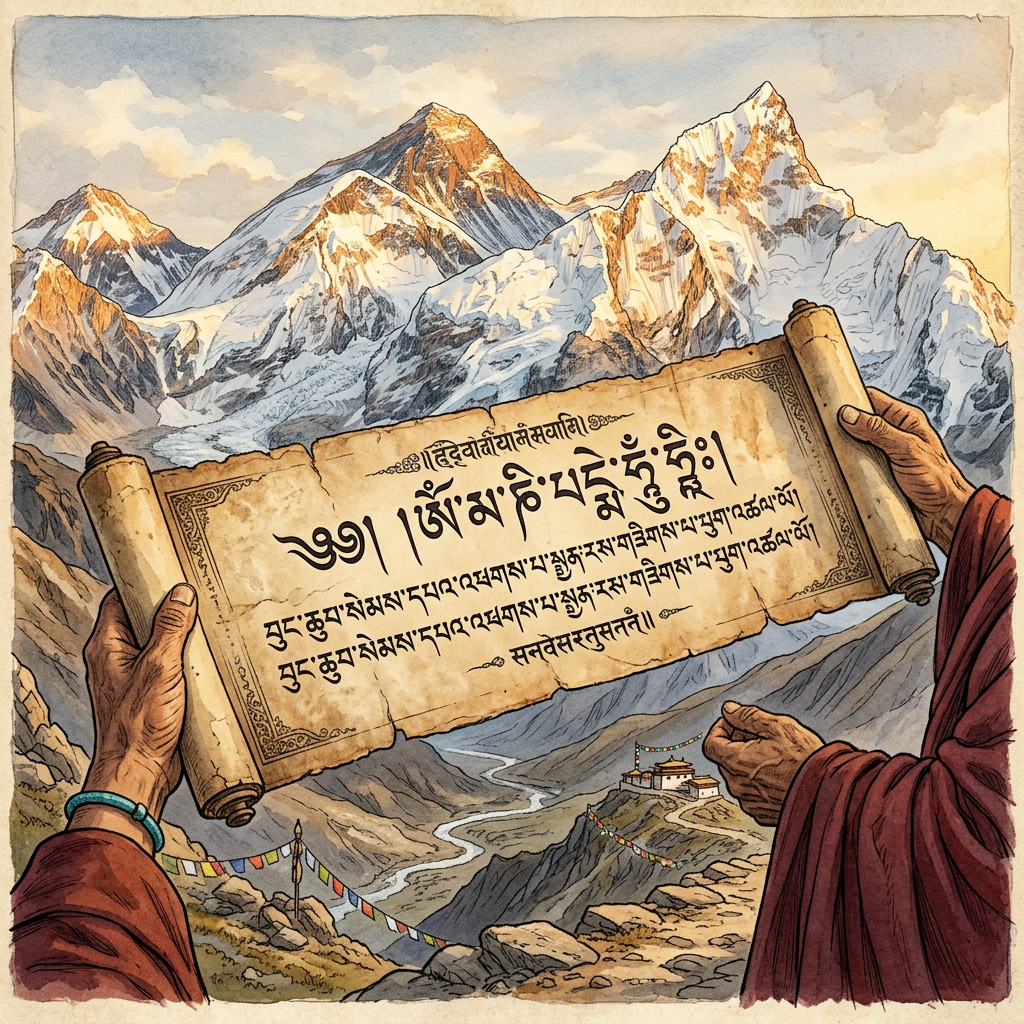
A team of researchers documenting high-altitude libraries has discovered a unique paper scroll in a hidden chamber of a Zanskar monastery. The document, 'Chetana-Maya-Vimarsha', dates to the 8th century and offers an intricate critique of the relationship between consciousness (Chetana) and the power of illusion (Maya). Written in a rare hybrid of Sharada and early Devanagari scripts, the text explores how the mind constructs a perceived world that both veils and reveals the underlying absolute reality.
The scroll is particularly significant for its early synthesis of Shakta and Advaita philosophies, arguing that Maya is not merely a delusion to be discarded, but a creative power of consciousness that must be understood and mastered. This perspective offers a more positive view of the physical world than many contemporary non-dualist texts. The discovery provides vital information on the spread of sophisticated metaphysical debates from the Indian plains into the Himalayan borderlands during the early medieval period.