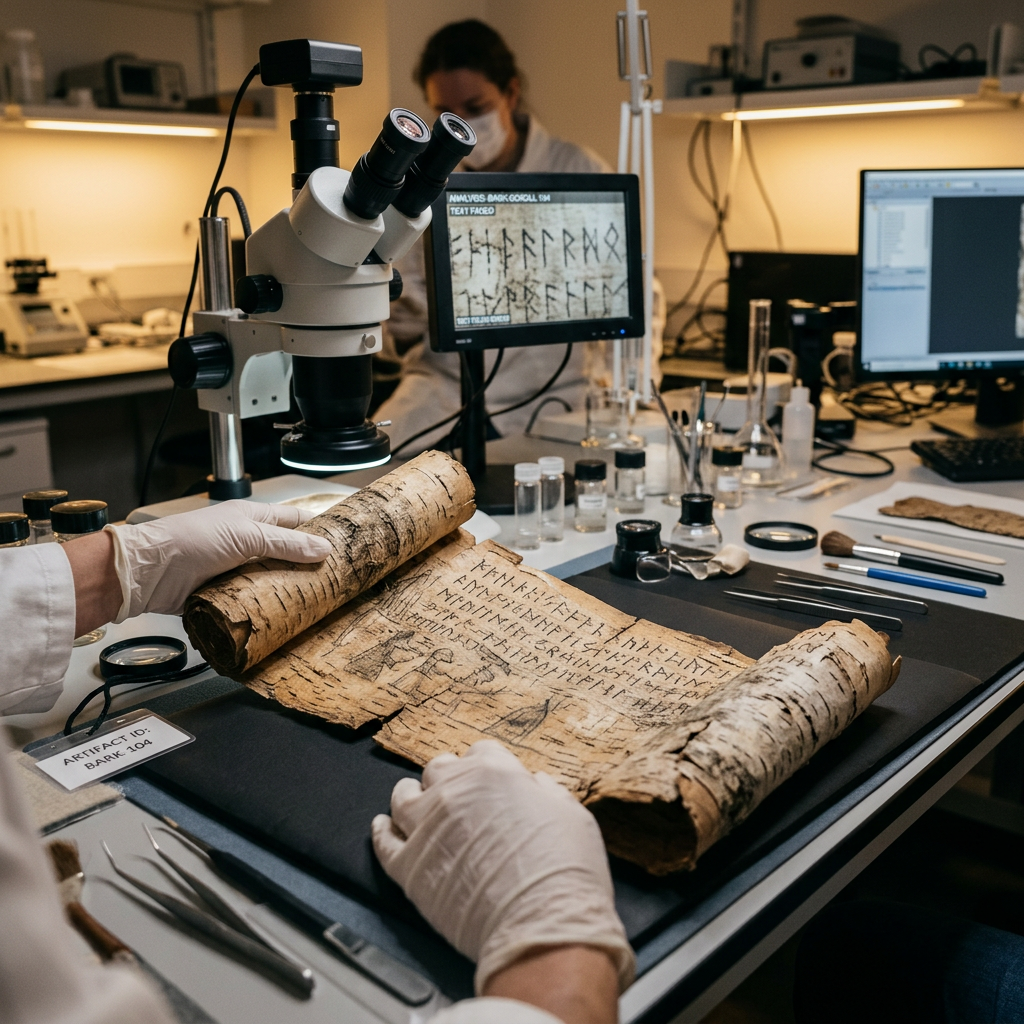
A high-resolution multispectral imaging project at the ruins of ancient Taxila has identified a fragmented birch-bark scroll containing the 'Niti-Krama', an early treatise on the philosophy of Krama (sequential order) in ethical development. Unlike later static ethical codes, this text posits that virtue is a dynamic process that must be cultivated through specific, incremental stages of mental and social discipline. It emphasizes that the 'Order of Truth' (Rta) is maintained through the rhythmic progression of individual actions within a community.
The discovery is being hailed as a major breakthrough in understanding pre-Mauryan pedagogical methods. The manuscript suggests that students were taught to view their personal growth as a reflection of cosmic cycles, linking the philosophy of time to the philosophy of character. Researchers from the University of Taxila note that the scroll’s dialect suggests a strong connection to the late Vedic period's transition into systematic logical inquiry, providing a missing link in the evolution of classical Indian ethics.