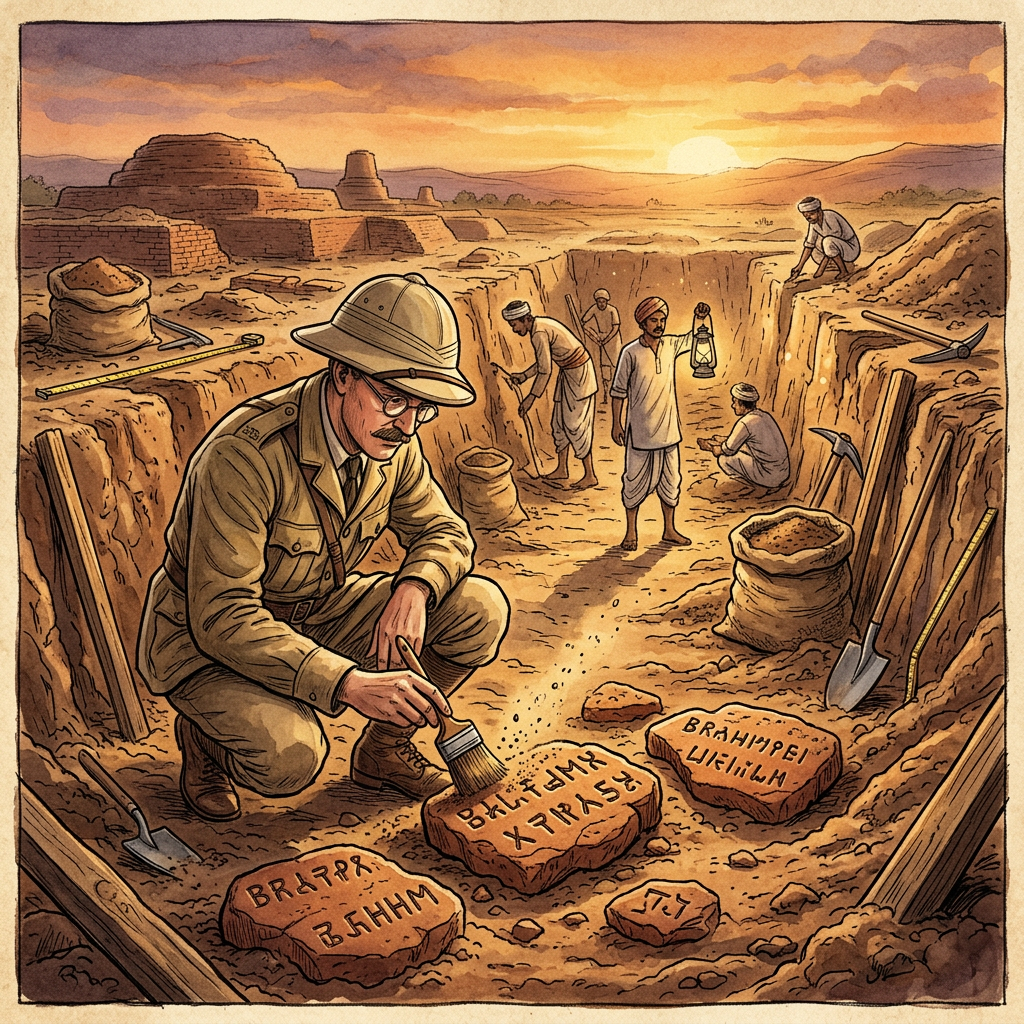
Recent excavations in the Ghaggar basin of Haryana have revealed a series of clay tablets inscribed with a text known as 'Anrita-Nirodha' (The Cessation of Falsehood). Dating to the 6th-century BCE, these tablets outline a sophisticated ethical framework where truth is defined not just as a spoken act, but as an ontological state of being. The text describes a series of mental exercises designed to purge the consciousness of 'deceptive constructs,' which it blames for social and spiritual disharmony.
The 'Anrita-Nirodha' tablets suggest that early Vedic-era thinkers in this region were already developing a rigorous 'philosophy of the negative'—defining what is real by methodically eliminating what is false. This approach predates many similar skeptical and analytic traditions in the West. Archaeologists suggest that the site may have been a center for philosophical debate, where different schools gathered to test their theories against the rigorous standards of Anrita-Nirodha.