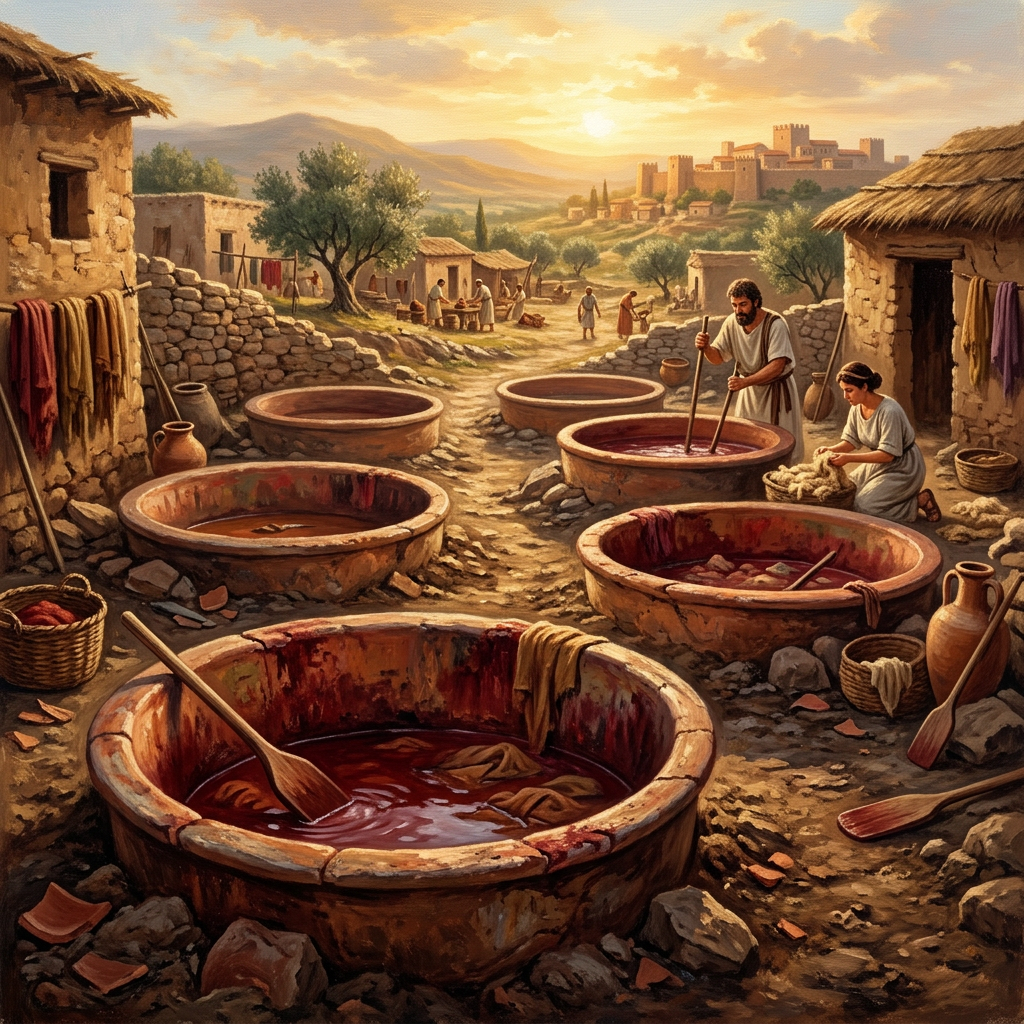
Recent excavations at a previously unrecorded site in the Indus Valley have revealed a complex of terracotta-lined vats containing chemical traces of Rubia tinctorum, or madder root. Researchers believe these vats were the centerpiece of a 4,000-year-old spring festival dedicated to the "Sacred Red," where ritual participants dyed their garments in vibrant hues to symbolize the rebirth of the landscape.
The site also yielded several small figurines wearing what appear to be ceremonial sashes, suggesting that the dyeing process was part of a highly structured social ritual. This find provides a rare glimpse into the sensory and aesthetic dimensions of Harappan cultural heritage, highlighting the importance of color in ancient seasonal celebrations.