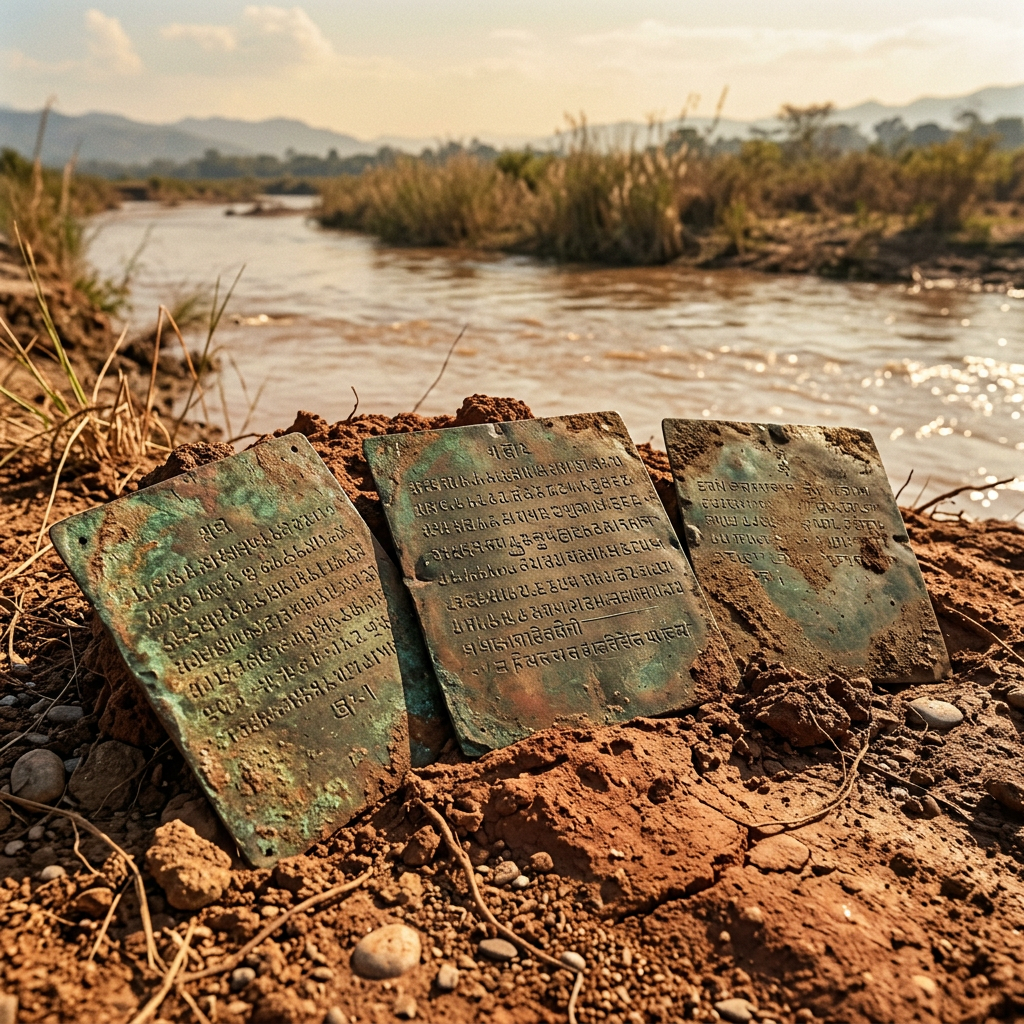
During routine excavations near the Narmada River, archaeologists discovered a set of five copper plates inscribed in an early form of Brahmi script. The inscriptions, titled the Niti-Dharma-Mandala, outline an early Vedic ethics of "shared sovereignty" and communal resource management that pre-dates the Mauryan administrative texts.
The text provides a detailed philosophical justification for the equitable distribution of natural resources, suggesting that the concept of Dharma was deeply integrated into the socio-economic governance of pre-Mauryan India. Scholars believe this find confirms the existence of highly organized ethical councils that mediated property and communal rights in ancient riverine societies.