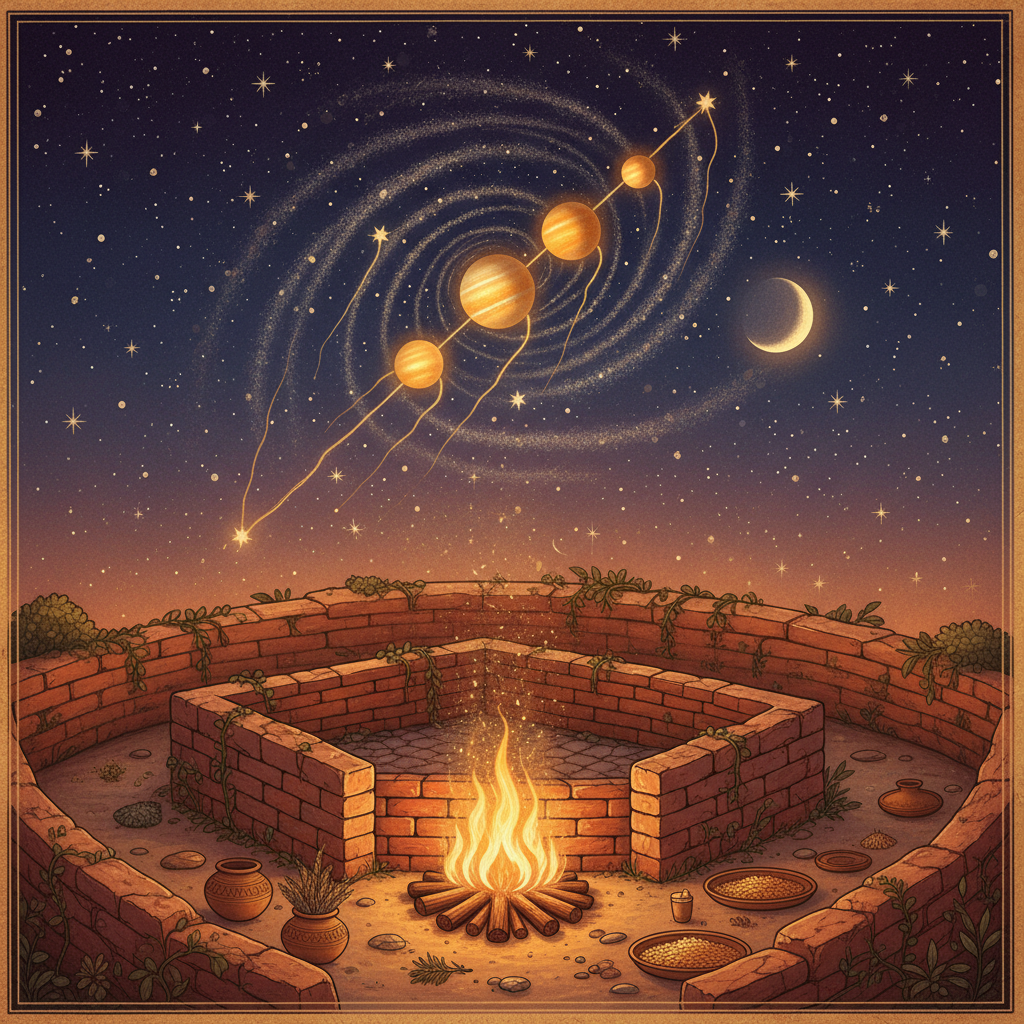
A new multidisciplinary research project published in The Heritage Daily has established a direct correlation between specific ritual descriptions found in the Shukla Yajurveda and a rare astronomical event. Using high-resolution celestial simulations, astronomers identified a triple conjunction of Mars, Jupiter, and Saturn that occurred within the nakshatra (constellation) of Uttara Ashadha in approximately 1750 BCE. The ritual instructions for the 'Soma-Yajna' during this period contain linguistic markers that precisely mirror the observable positions and relative luminosities of these planets during the event.
The study argues that these texts were not merely liturgical but served as precise observational logs of celestial phenomena. This research challenges the timeline of Vedic composition, suggesting that the astronomical data preserved in the oral tradition reflects a high level of mathematical observational skill that predates the classical era of Indian astronomy. The findings suggest that the Vedic calendar was maintained with a level of precision that accounted for long-term planetary cycles, allowing priests to synchronize major rituals with unique planetary alignments.