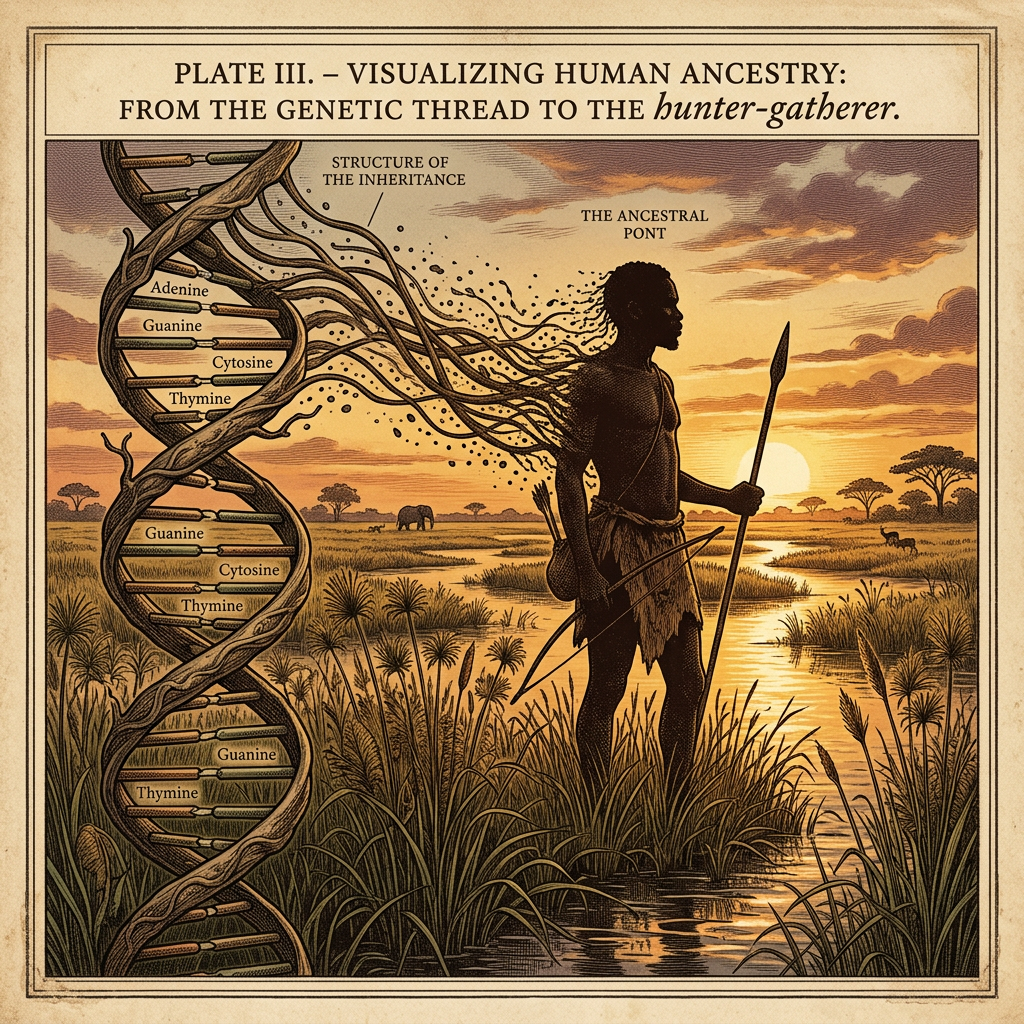
In a pioneering paper featured in Nature Ecology & Evolution, researchers have sequenced the genome of 11,500-year-old human remains discovered in the Okavango Basin of Southern Africa. The paleogenomic analysis identifies the earliest known instance of genetic selection for resistance to Borrelia duttonii, the pathogen responsible for tick-borne relapsing fever. This finding suggests that early Holocene hunter-gatherer populations in the region were under intense evolutionary pressure from localized vector-borne diseases as the environment transitioned during the post-glacial period.
The study also uncovers a previously unidentified 'ghost lineage' in Southern Africa that diverged from other hunter-gatherer groups approximately 30,000 years ago. This group appears to have developed unique metabolic adaptations to the high-alkaline water sources of the inland delta. By mapping these ancient DNA signatures, anthropologists are now able to better understand the complex migration patterns and survival strategies of Pleistocene humans who remained in the sub-Saharan interior during periods of extreme climatic volatility.