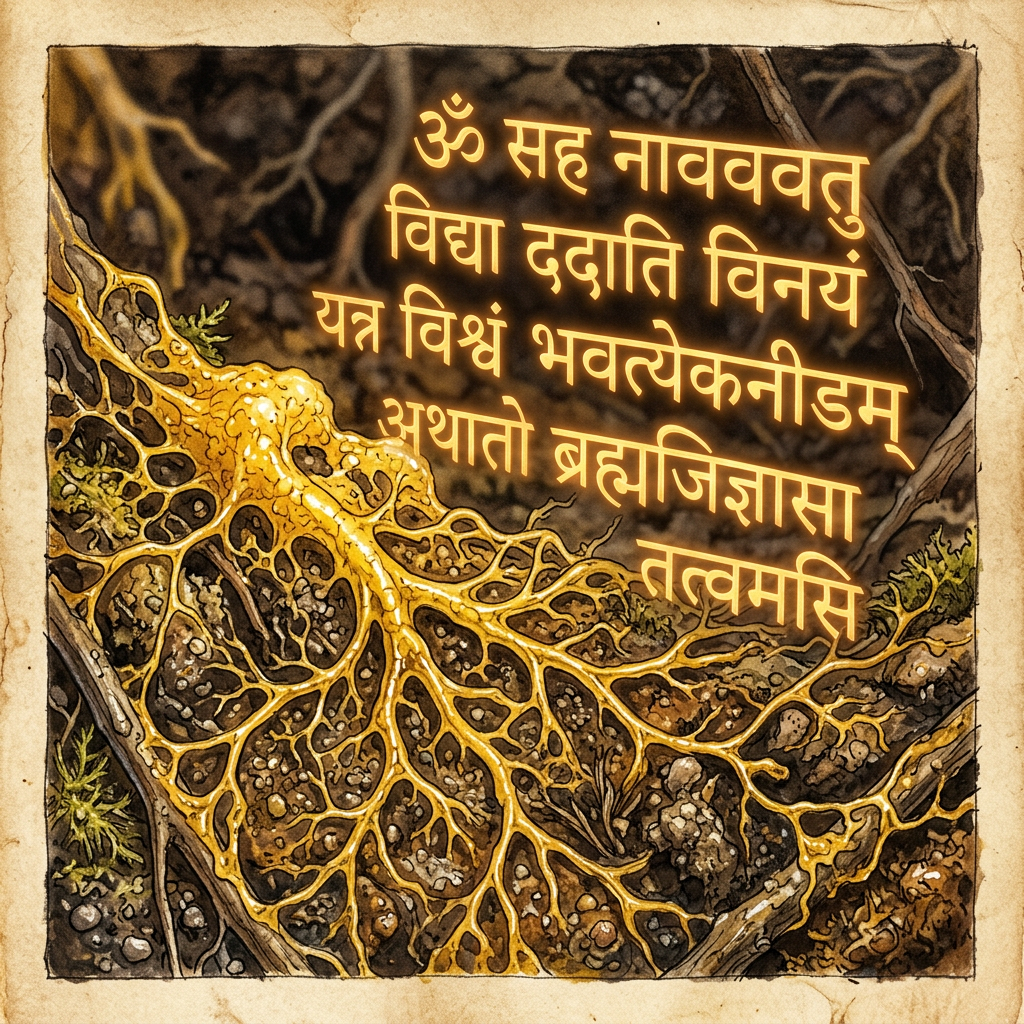
A recent project featured on Phys.org has utilized a new machine-learning algorithm to reconstruct the text of several 7th-century Late-Brahmi copper plate inscriptions found in Central India. To the researchers' surprise, the plates do not detail land grants as expected, but instead contain a lost Sanskrit treatise on Subterranean Myxomycetes (slime molds). The text provides a systematic classification of various fungal and amoeboid species found in the root systems of ancient forests and their role in 'Bhu-Vardhana' or the natural enrichment of soil nutrients.
The manuscript details protocols for the intentional propagation of specific slime mold varieties to enhance the yield of pulse crops, demonstrating an advanced understanding of microbial ecology long before the invention of the microscope. This discovery suggests that ancient Indian agricultural scientists had identified the relationship between soil health and macroscopic microbial colonies. The AI-driven decipherment has opened a new window into the history of ancient Indian botany and sustainable agricultural practices, highlighting a sophisticated empirical tradition of soil science.