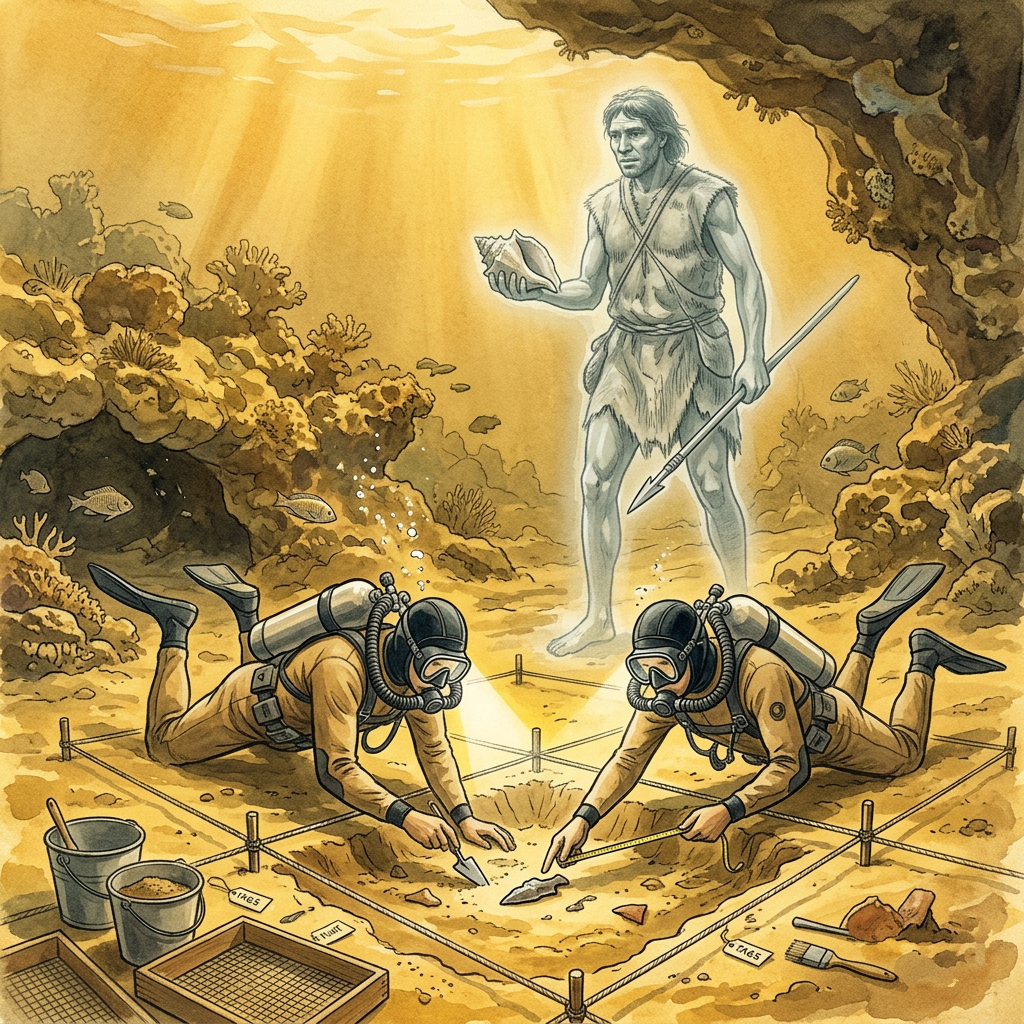
A large-scale study published in the Proceedings of the National Academy of Sciences (PNAS) has analyzed ancient DNA from human remains recovered from a submerged rock shelter off the Great Australian Bight. The remains, dating to 14,000 years ago when the continental shelf was still dry land, reveal a distinctive Pleistocene lineage of Aboriginal Australians. This population possessed a unique genetic variant in the FADS1 gene cluster, which facilitated the efficient metabolism of high-calcium, high-phosphorus diets primarily derived from marine crustaceans.
The genomic data suggests that this group had been isolated from the interior populations of the Sahul continent for several millennia, developing specialized anthropological adaptations to a coastal environment that has since been lost to rising sea levels. This research provides critical evidence for the 'coastal highway' theory of human migration within Australia and shows how early maritime foragers adapted their biology to specific marine ecosystems. The study underscores the importance of underwater archaeology in reconstructing the full scope of human genetic history during the terminal Pleistocene.