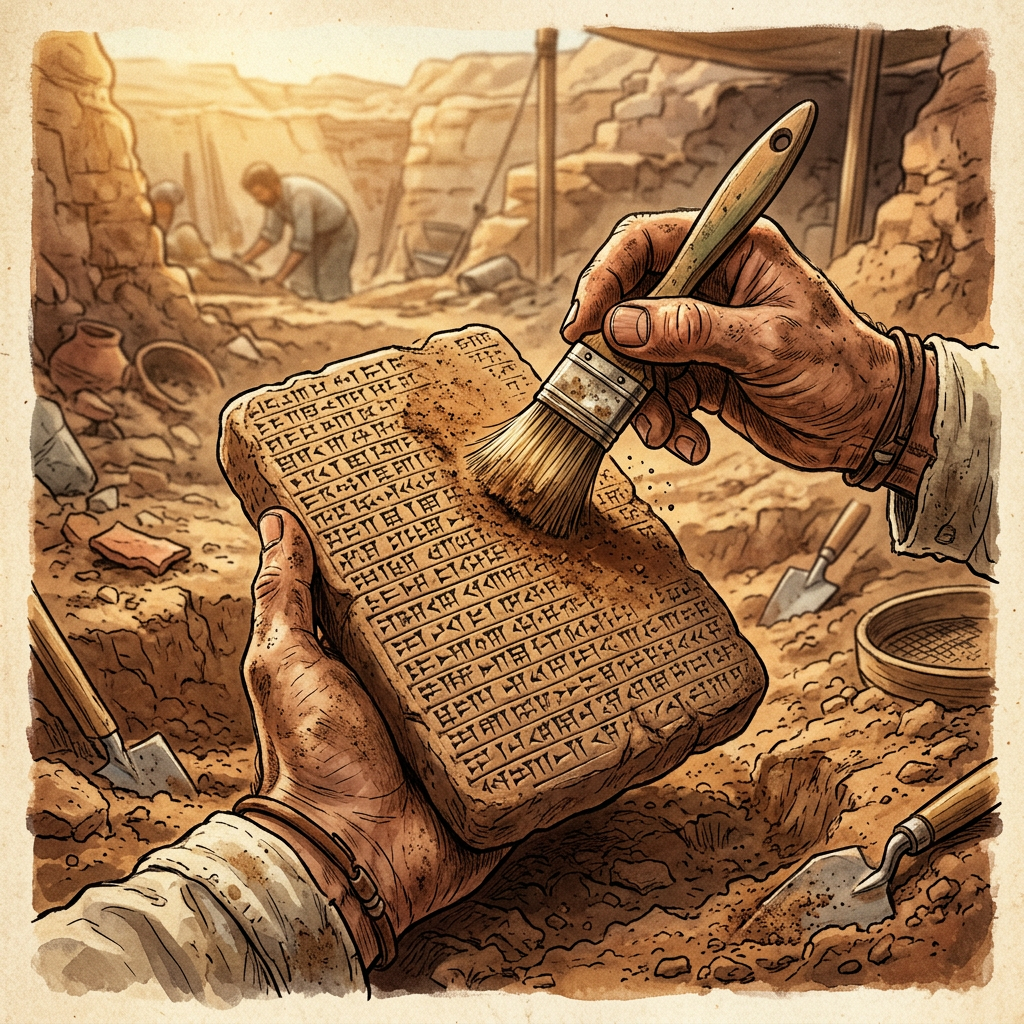
Archaeologists working in the city of Kish, modern-day Iraq, have unearthed a rare cuneiform archive that provides a detailed look at the security infrastructure of the Old Babylonian Empire. The find consists of dozens of clay tablets forming a comprehensive registry of royal caravan-escorts, listing the names, equipment, and routes assigned to guards protecting the transport of lapis lazuli and silver from the eastern highlands.
The archive includes specific security protocols for defending caravans against regional raiding parties, including the earliest known mention of 'coded signal-flares' used between desert waystations. This administrative record offers unprecedented insight into the high cost and complex logistics required to maintain safe passage along the empire's primary trade corridors.