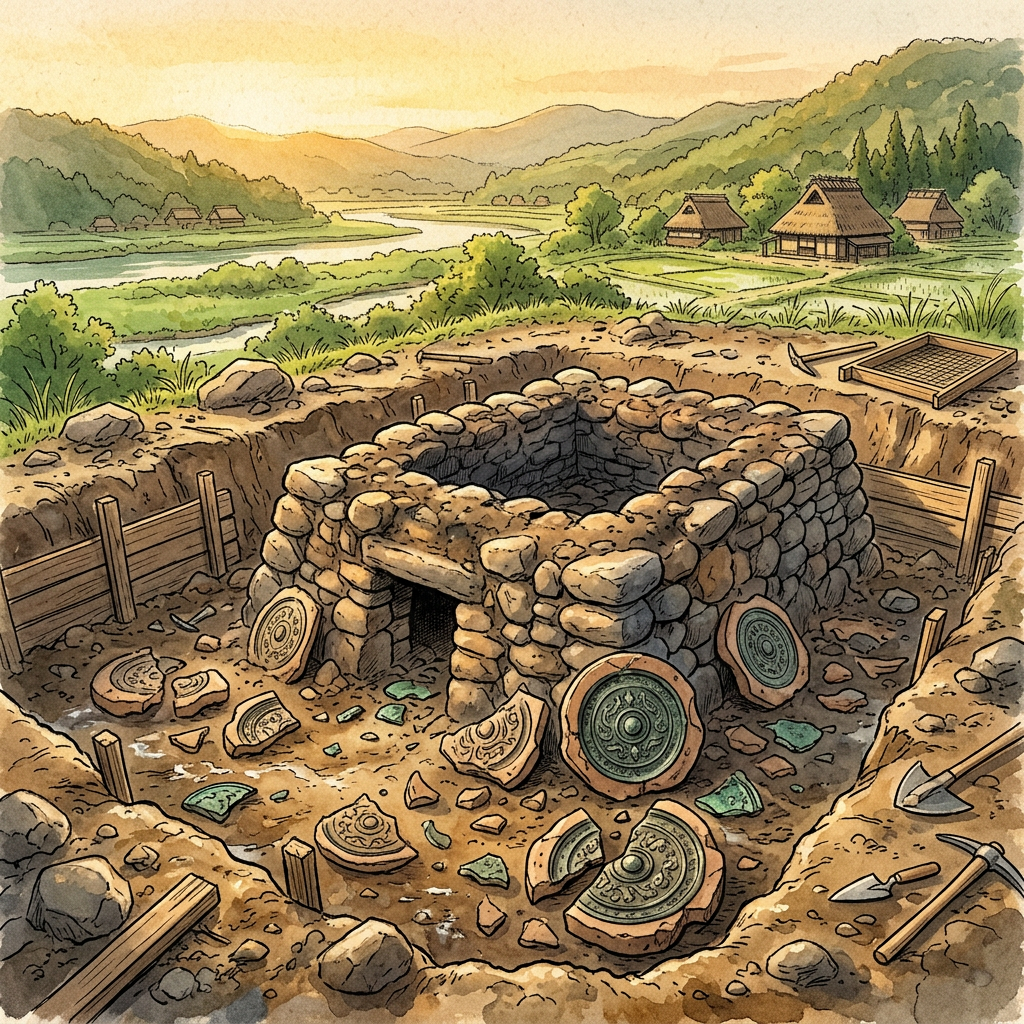
Excavations in Japan's Fukuoka Prefecture have uncovered a major industrial site from the late Yayoi period, specifically a regional center for the casting of ritual bronze mirrors. The site, located in the Chikugo River basin, features intact clay molds with unique geometric 'Sun-pattern' motifs, alongside a high-temperature stone kiln that reveals advanced knowledge of copper-alloy metallurgy.
Surrounding the workshop, archaeologists discovered concentric ritual pits containing shattered pottery and obsidian blades, suggesting that the casting process was accompanied by complex religious ceremonies. This discovery confirms that mirror production was a highly controlled and localized industry that played a central role in the social and religious stratification of early Japanese chiefdoms.