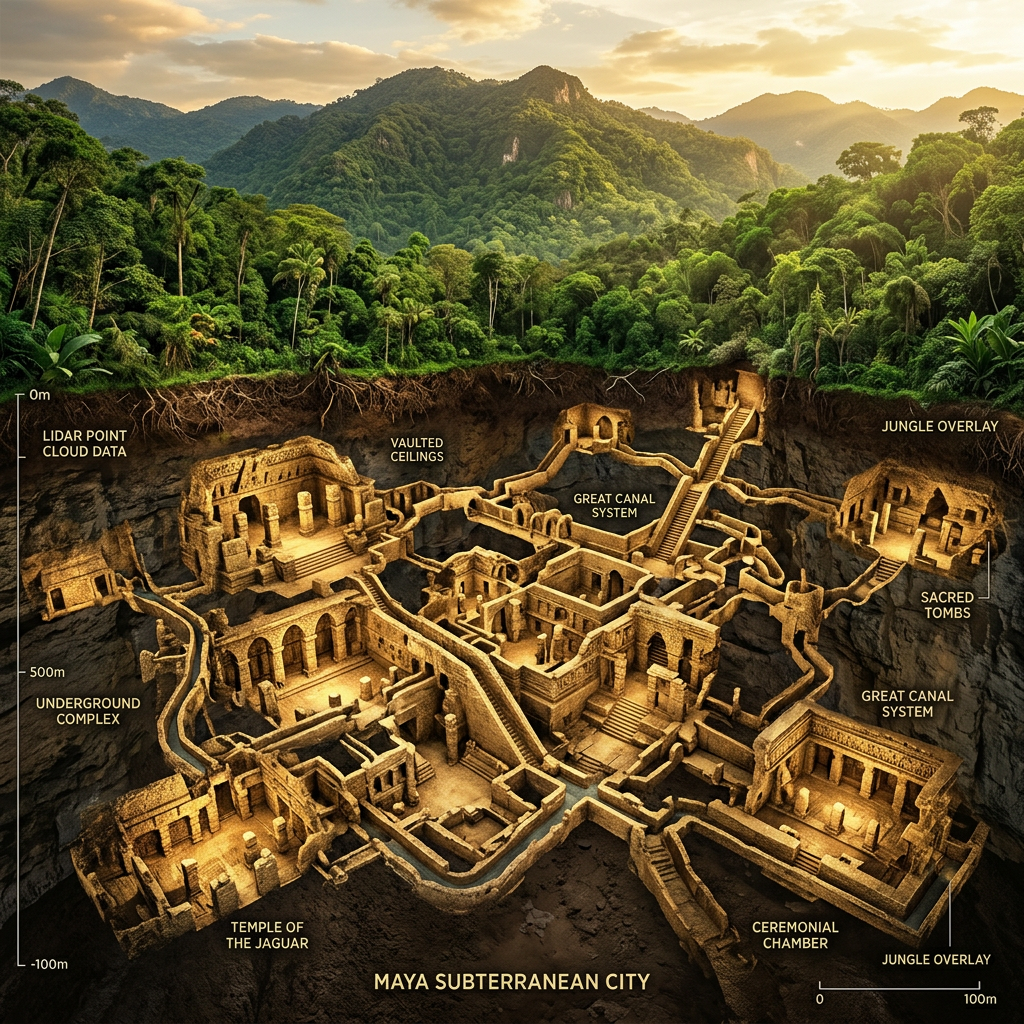
Using high-resolution LiDAR technology, researchers in the southern highlands of Guatemala have identified a vast and previously invisible network of subterranean chambers and tiered stone-lined caves dating back to the late 9th century. These structures are believed to have formed an industrial-scale mushroom-cultivation complex, utilized by the Maya for producing specific fungi used in both ritual ceremonies and as a high-protein food source during periods of agricultural instability.
The mapping reveals over 300 individual cultivation pits connected by a series of sophisticated ventilation shafts and moisture-regulating stone channels. This find challenges the traditional view of Maya agriculture being dominated by surface-level crops, suggesting a much deeper integration of subterranean environmental management into their urban infrastructure.