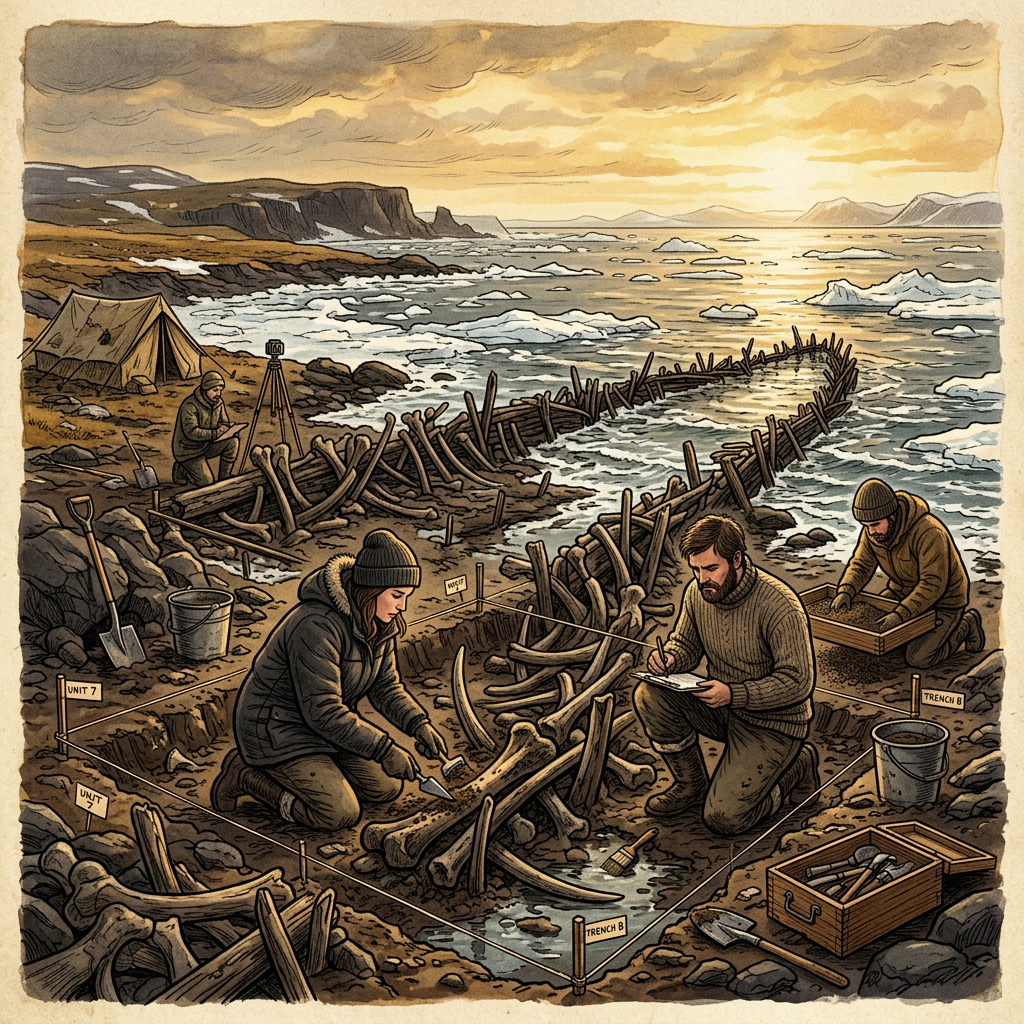
Rapidly thawing permafrost in the Chukchi Peninsula has revealed perfectly preserved 5,000-year-old fishing weirs made of walrus bone and willow branches. These structures, attributed to the Paleo-Siberian peoples, provide the first direct evidence of complex aquatic engineering in the Arctic during the mid-Holocene period, predating established timelines for sedentary coastal living.
The discovery was made possible by retreating shorelines, which exposed the submerged foundations of an ancient coastal village. Archaeologists noted that the organic materials, including intact sinew lashings, remained preserved due to the anaerobic conditions of the frozen soil, offering a rare window into prehistoric Arctic survival strategies and human adaptation to shifting climatic conditions.