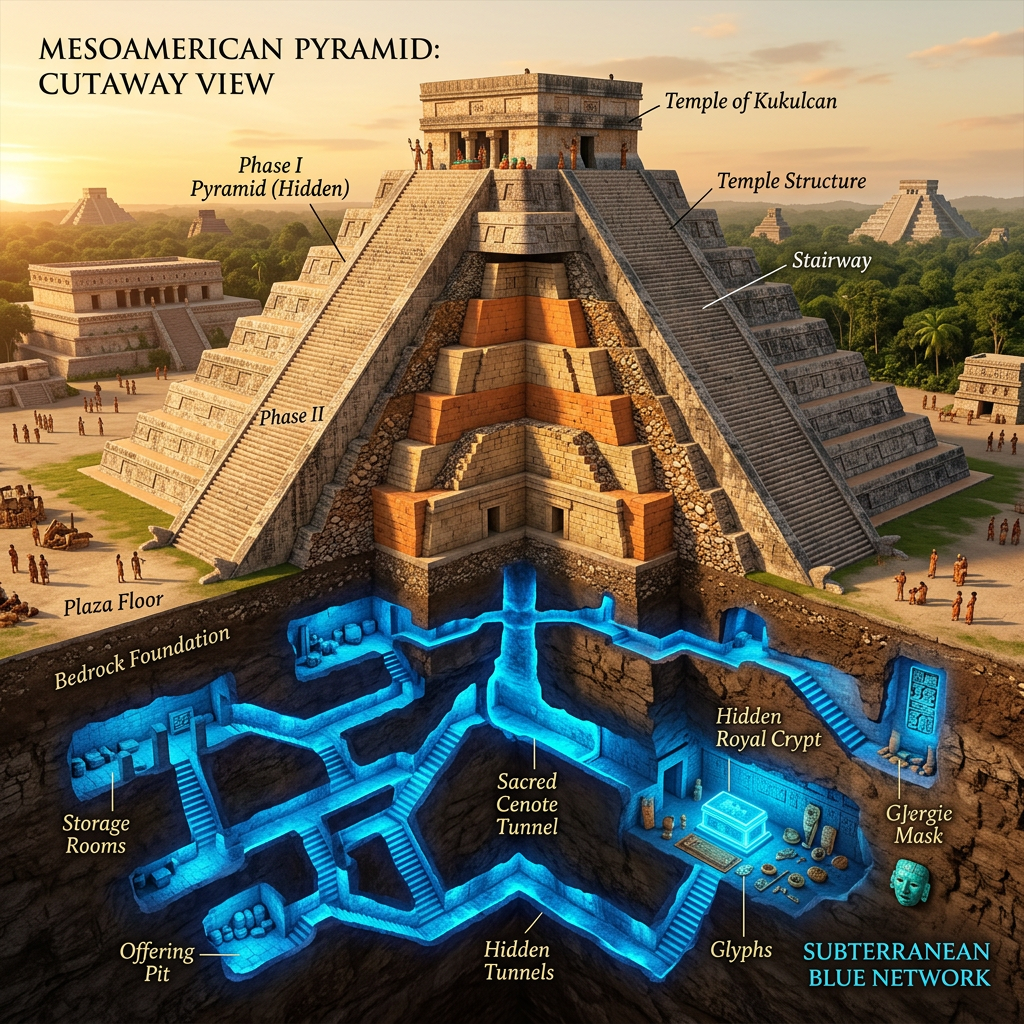
Researchers from the National Institute of Anthropology and History (INAH) have successfully utilized Quantum-Sensing Gravimetry to map a previously unknown network of tunnels beneath the Monte Albán acropolis in Mexico. This cutting-edge technology, which detects minute variations in gravity caused by underground voids, revealed a series of interconnected chambers and a large vaulted space located fifteen meters below the surface of the North Platform. The discovery suggests that the Zapotec elite utilized a sophisticated subterranean ritual landscape that mirrors the celestial architecture above.
The newly identified chambers appear to pre-date the main construction phase of the visible pyramids, pointing to an earlier, foundational stage of the site’s development. Archaeologists believe these voids may contain intact offerings or funerary contexts that could redefine the early history of urbanism in the Oaxaca Valley. Preservation teams are now planning targeted, minimally invasive excavations to confirm the contents of the vaults.