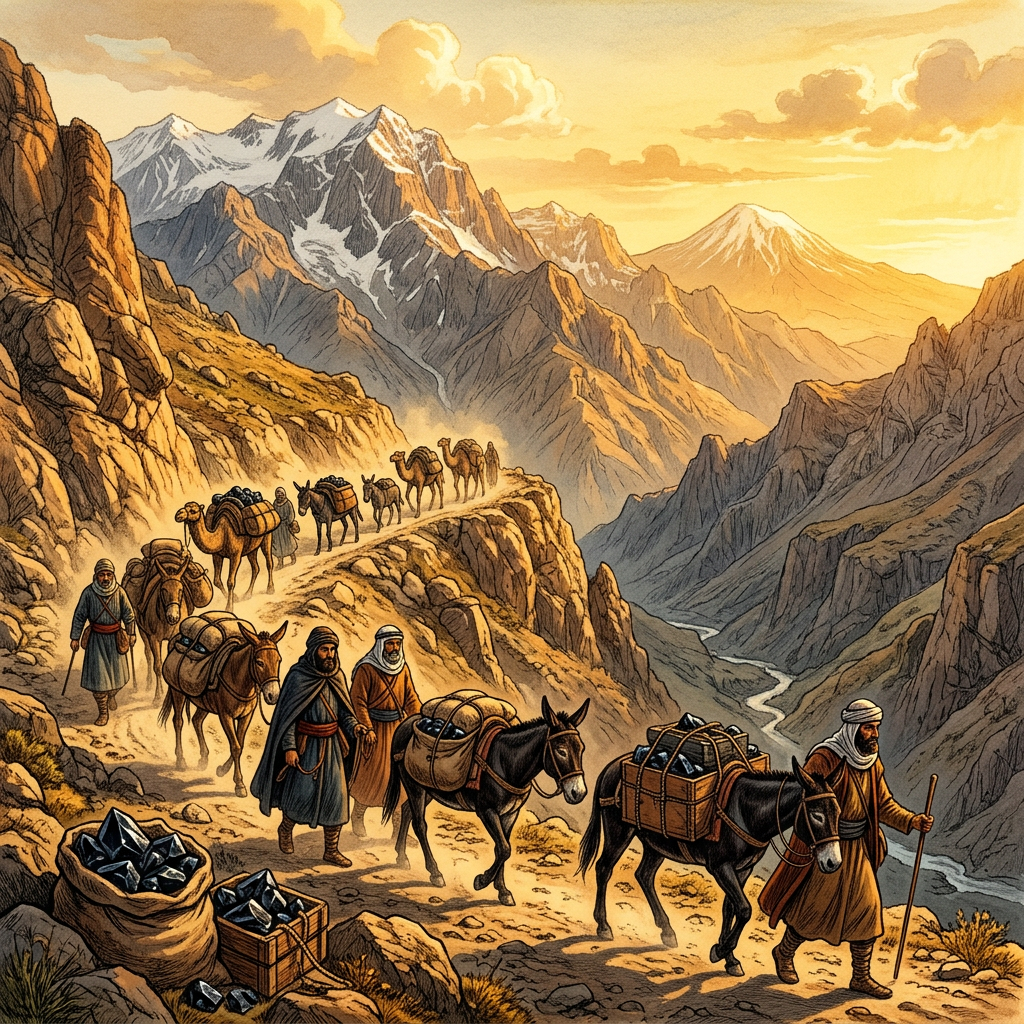
A joint research team of archaeologists from Armenia and France has identified a significant 6,000-year-old trade route dubbed the 'Obsidian and Magnetite Trail.' Through geochemical analysis of artifacts found at sites in the Levant, researchers traced the unique chemical signatures of volcanic glass and iron-rich minerals back to specific quarries in the Armenian Highlands. This discovery suggests a far more organized and long-distance exchange network during the Chalcolithic period than previously understood.
The study highlights how these materials were not only used for weaponry and tools but also served as high-status prestige goods that fueled social stratification in early urban centers. The identification of seasonal stopovers along the trail provides a new map for understanding the cultural and technological diffusion that occurred between the Caucasus and the Near East prior to the rise of the first empires.