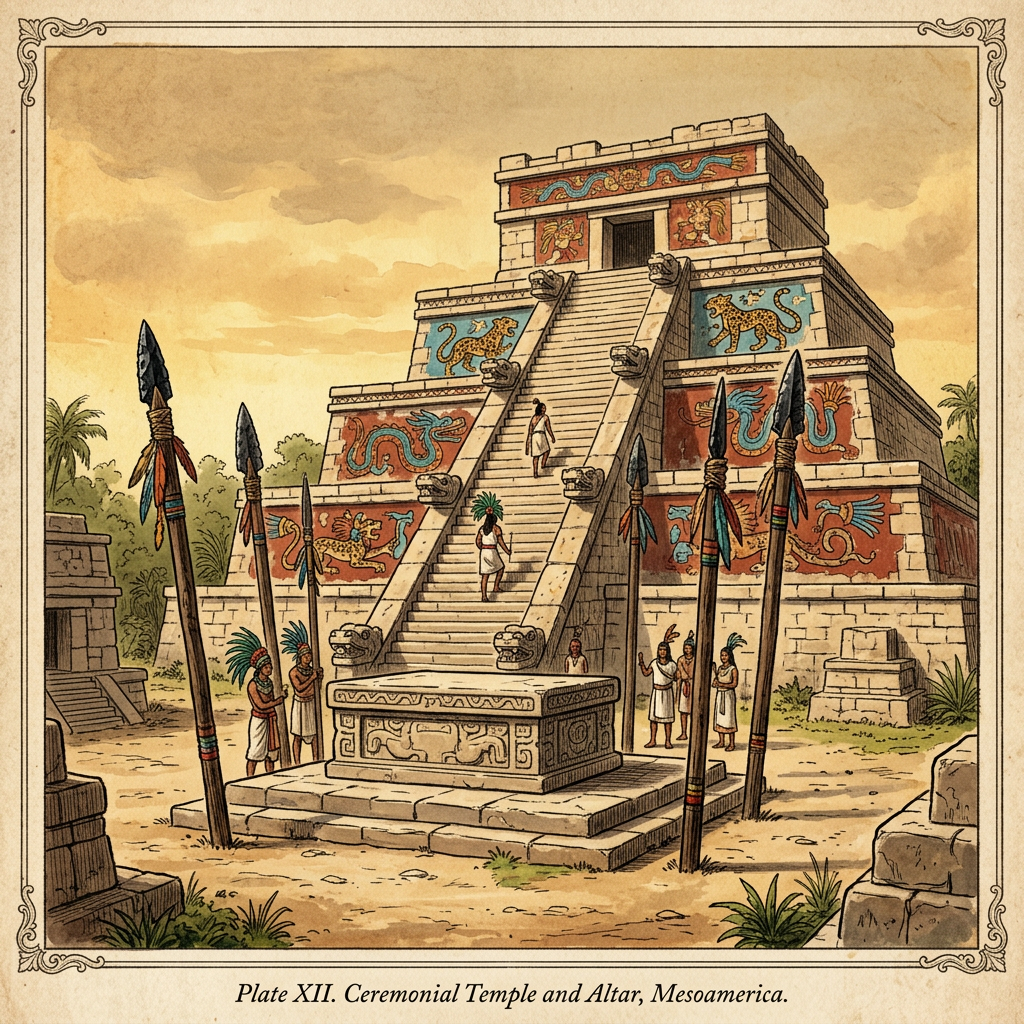
A significant ceremonial temple exhibiting strong Teotihuacan architectural influence has been discovered in the Puebla Highlands of Mexico. Dating to approximately 250 CE, the structure consists of three stepped platforms and a central altar. During excavation, researchers found four ceremonial standards made of cedar wood and topped with large, finely knapped obsidian spearheads, used during ritual dances.
The temple is decorated with rare polychrome murals showing a deity associated with rain and lightning, rendered in the classic 'talud-tablero' style characteristic of the great metropolis of Teotihuacan. This find suggests that Teotihuacan's cultural and religious hegemony extended further into the mountainous regions of central Mexico than previously estimated by historians.