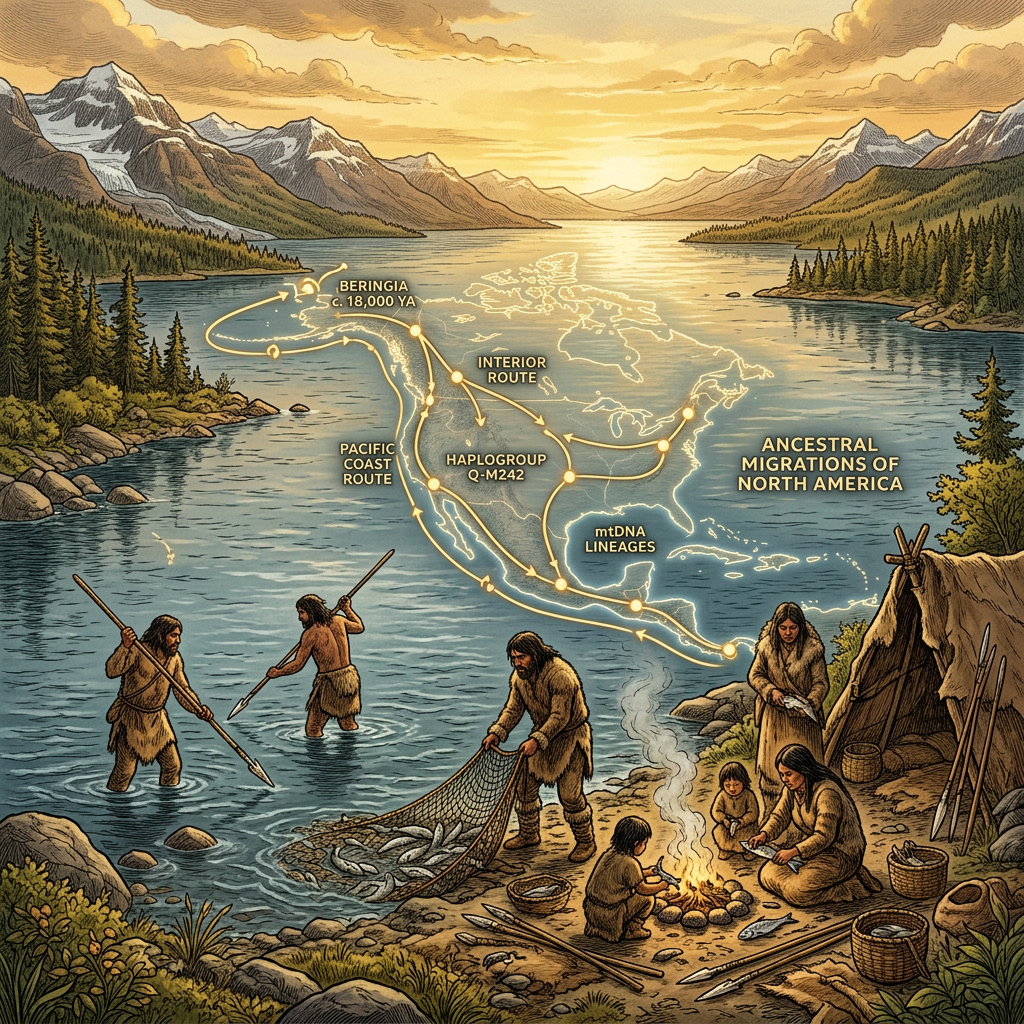
A comprehensive genomic study of 13,000-year-old human remains discovered near the Lake Superior basin has revealed a previously unknown Paleo-American lineage. The research, featured in Paleogenomics Quarterly, identifies specific genetic adaptations for processing high levels of zinc and other minerals common in the post-glacial freshwater ecosystems of the Great Lakes. This lineage appears to have diverged from other Beringian migrants during the final pulse of the Pleistocene.
The analysis shows that these individuals possessed a unique metabolic pathway that allowed them to thrive on a diet dominated by deep-water lacustrine resources. This specialized adaptation suggests that early human colonization of the Americas was characterized by high levels of regional diversification far earlier than once thought. The study concludes that this 'Lake Superior Ghost Lineage' represents a distinct evolutionary branch that successfully navigated the extreme environmental shifts following the retreat of the Laurentide Ice Sheet.