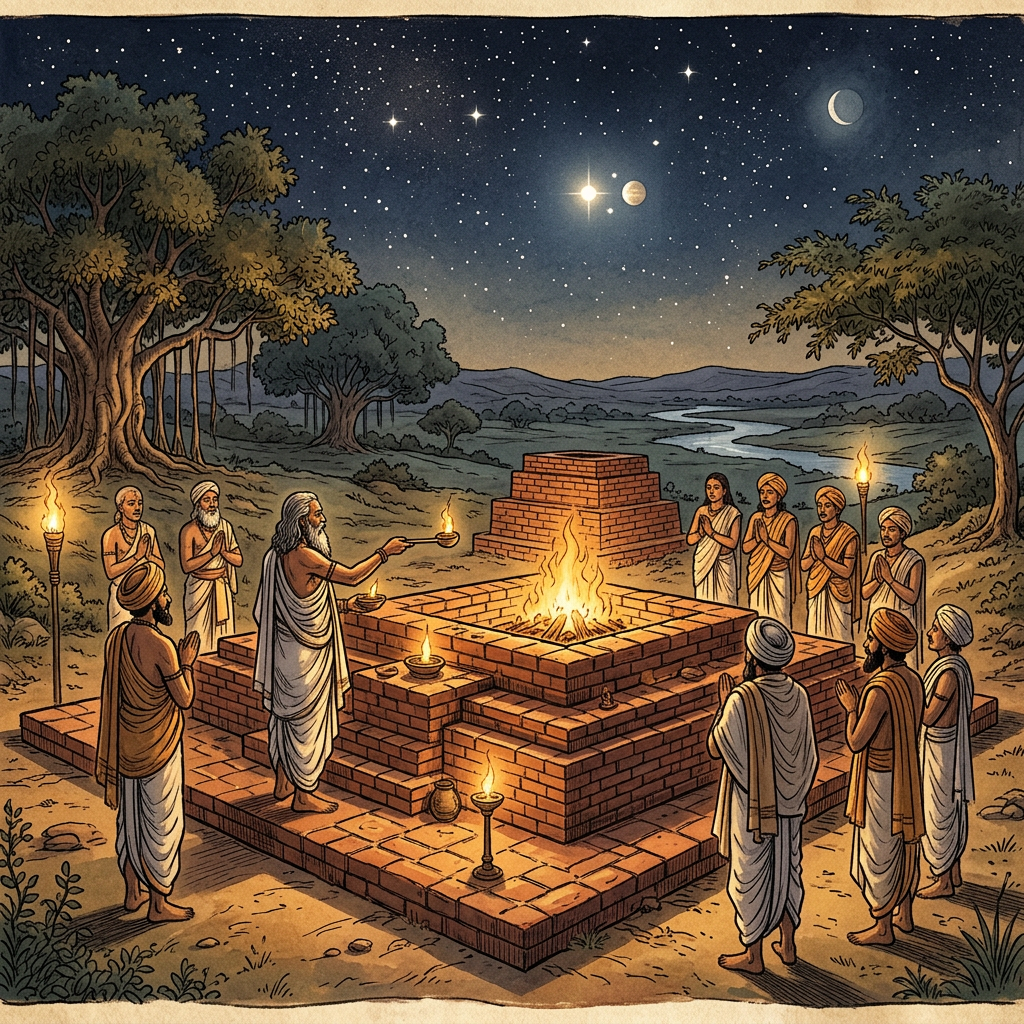
A new multidisciplinary study published in the Journal of Ethnoastronomy has linked specific ritual descriptions in the Yajurveda to a rare astronomical event. Using advanced sky-mapping simulations, researchers demonstrated that the spatial arrangement of certain Vedic fire altars directly correlates with the Great Conjunction of Saturn and Jupiter as it appeared in the constellation of Purva Phalguni in 2600 BCE. This finding provides critical internal evidence for the antiquity of Vedic astronomical observations.
The study argues that the precise geometry of the 'Shyena Chiti' (eagle-shaped altar) was designed to map the orbital resonance of the giant planets during this specific celestial alignment. By integrating archaeoastronomy with philological analysis, the researchers have been able to establish a firm observational date for the composition of these ritual layers. This provides a new anchor point for the chronology of ancient Indian science and its transition from oral tradition to systemic record-keeping.