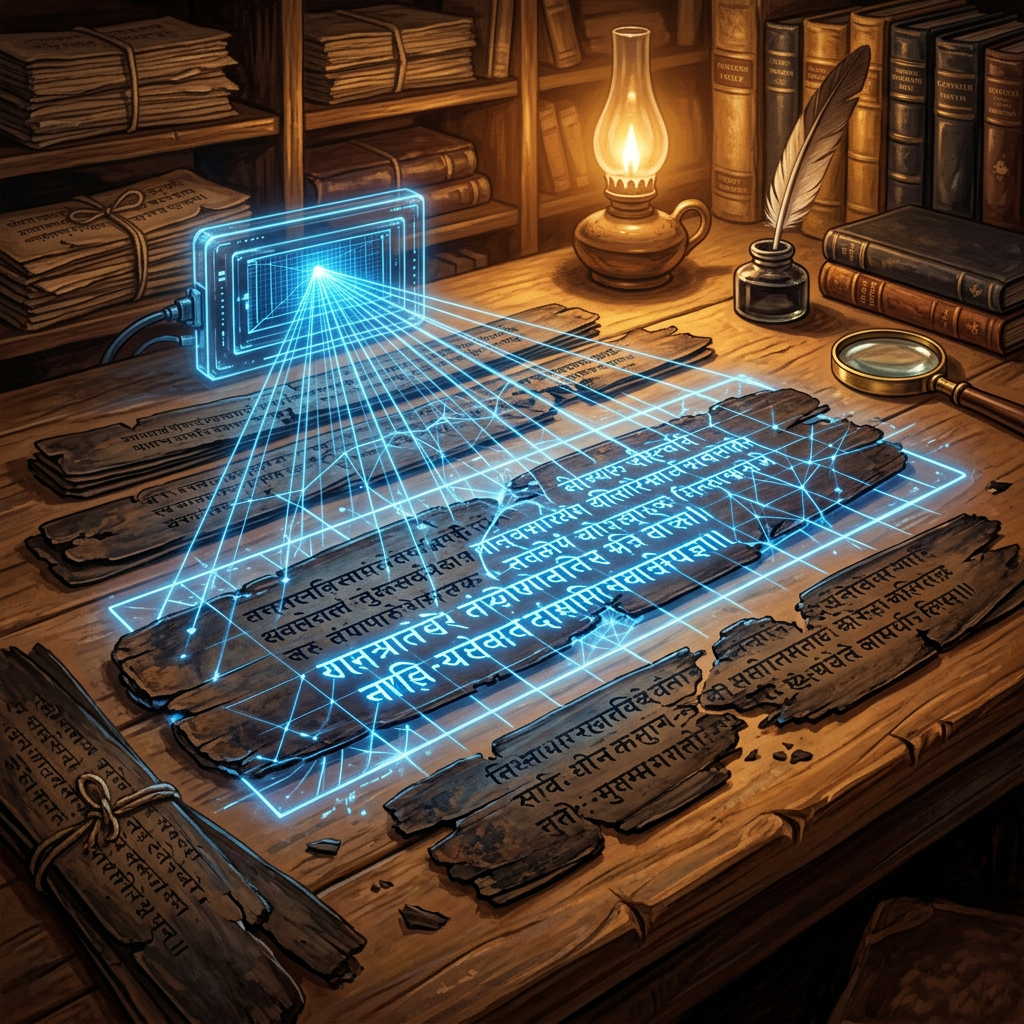
Utilizing advanced multi-spectral imaging and neural-network-driven linguistic modeling, researchers at Nalanda University have deciphered fragmented palm leaves known as the Chetana-Sagara. Recovered from a dry well in Bihar last year, the text provides a detailed account of a lost philosophical school that viewed individual consciousness as a 'wave' emerging from a vast, impersonal 'ocean' of awareness. The 10th-century document challenges the more atomistic views of the mind prevalent in later school systems.
The 'Chetana-Sagara' contains sophisticated metaphors regarding the fluidity of the self, arguing that the perception of a separate identity is a temporary 'tidal effect' caused by sensory attachment. The AI reconstruction has successfully recovered over 80% of the original logical proofs, which use fluid dynamics as a primary analogy for mental processes. This breakthrough offers a significant new data point for the history of Indian psychology and non-dualist thought.