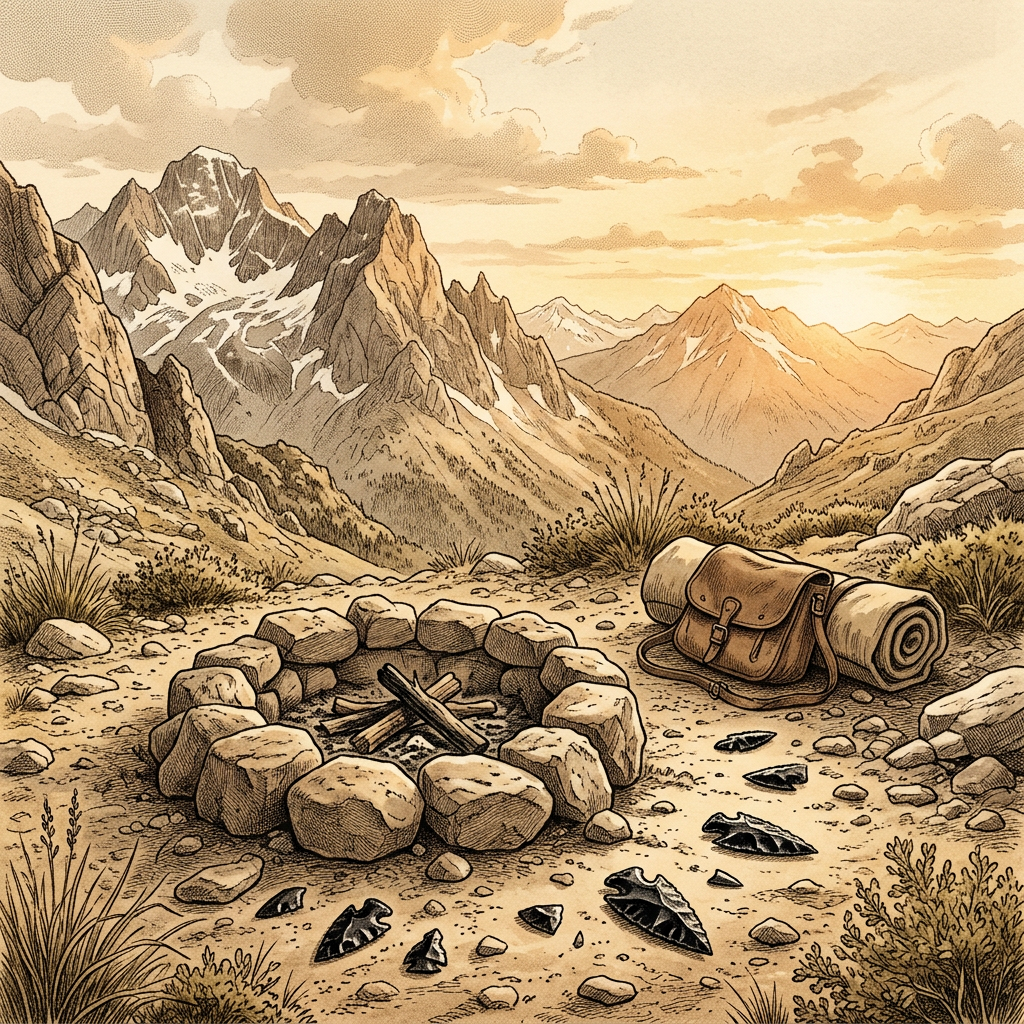
Archaeologists in the high-altitude canyons of British Columbia have uncovered a significant 10,000-year-old obsidian processing site. The discovery includes over 2,000 flakes and finished tools made from high-quality volcanic glass, sourced from a mountain over 500 kilometers away. The site appears to have functioned as both a specialized workshop and a ceremonial gathering point for early post-glacial inhabitants of the Pacific Northwest.
Excavations have revealed a circular stone arrangement surrounding a central hearth, where researchers found charred remains of alpine plants and small animal bones used in ritual offerings. This find provides crucial data on the long-distance trade networks and spiritual practices of early indigenous groups as they adapted to the warming climate of the early Holocene epoch.