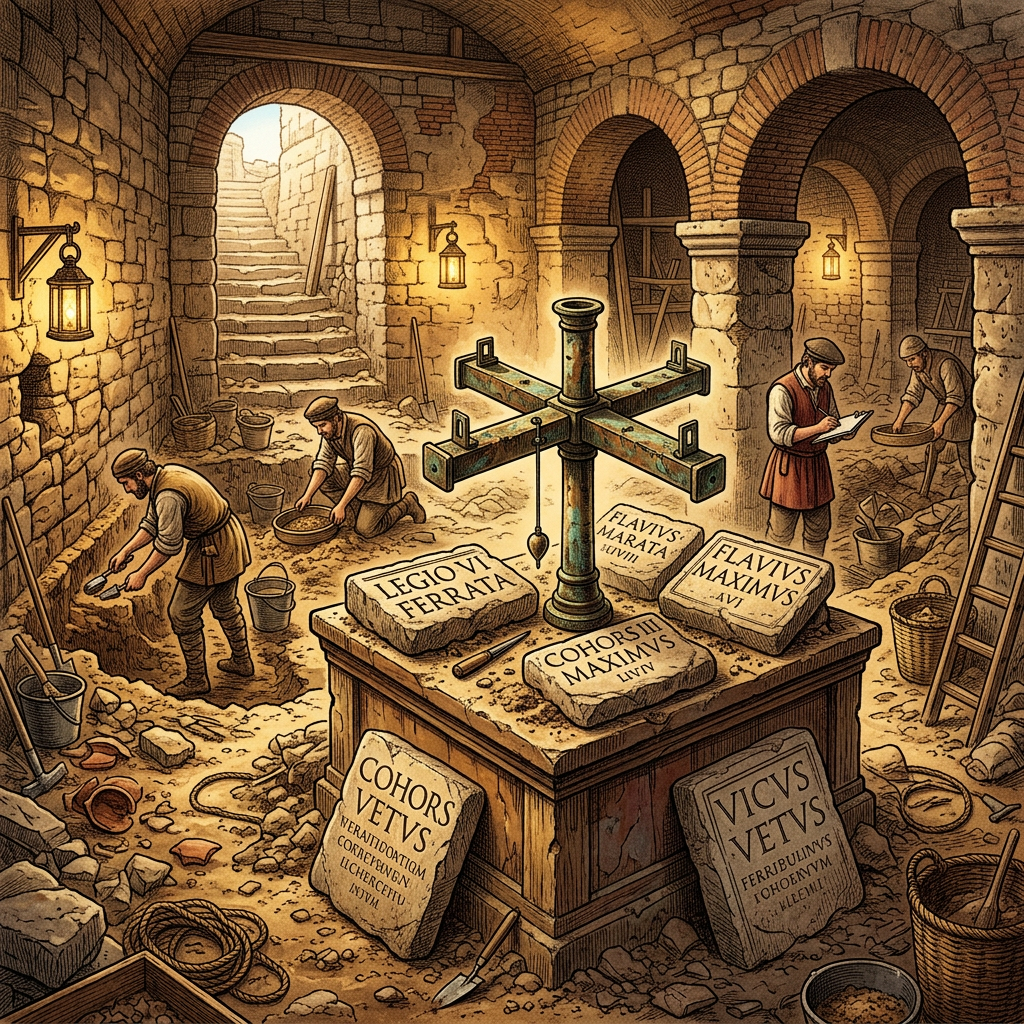
Excavations in a remote desert region of northern Algeria have revealed an exceptionally rare 2nd-century Roman building dedicated to territorial surveying and cartography. The structure served as a local headquarters for the agrimensores (land surveyors) responsible for the centuriation of the North African provinces. Remarkably, the office was found with its equipment still inside, preserved under centuries of shifting sands.
Among the artifacts recovered is a perfectly preserved bronze groma, the primary tool used for horizontal sighting, along with several lead-weighted leveling devices and a set of engraved mapping tablets. These tablets contain detailed plans for a local irrigation network, providing historians with an unprecedented look at how the Roman administration managed complex engineering projects in its frontier territories.