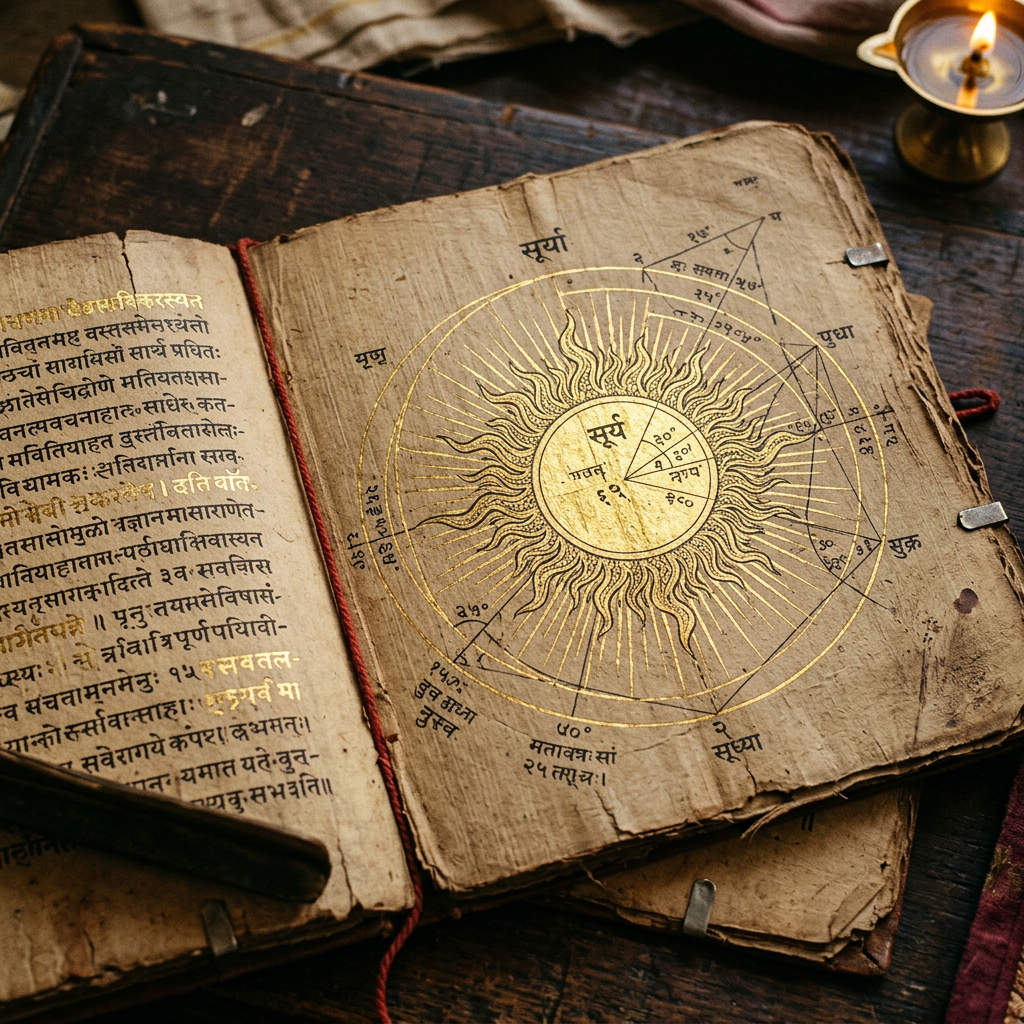
New computational research published in the Journal of Astronomical History and Heritage has unveiled a sophisticated mathematical framework within the 11th-century Siddhanta-Shikha manuscripts. Using advanced algorithmic modeling, scholars from the Indian Institute of Science demonstrated that the text contains recursive methods for predicting solar photospheric fluctuations and limb darkening effects with a precision previously thought impossible for the medieval era.
The study highlights the use of Sanskrit mathematical logic to account for the non-linear velocity of solar plasma, providing a historical antecedent to modern solar physics. These findings suggest that medieval Indian astronomers utilized long-term observational data to refine their models of the solar disc, moving beyond simple geometric orbits to embrace complex fluid-dynamic approximations encoded in verse.