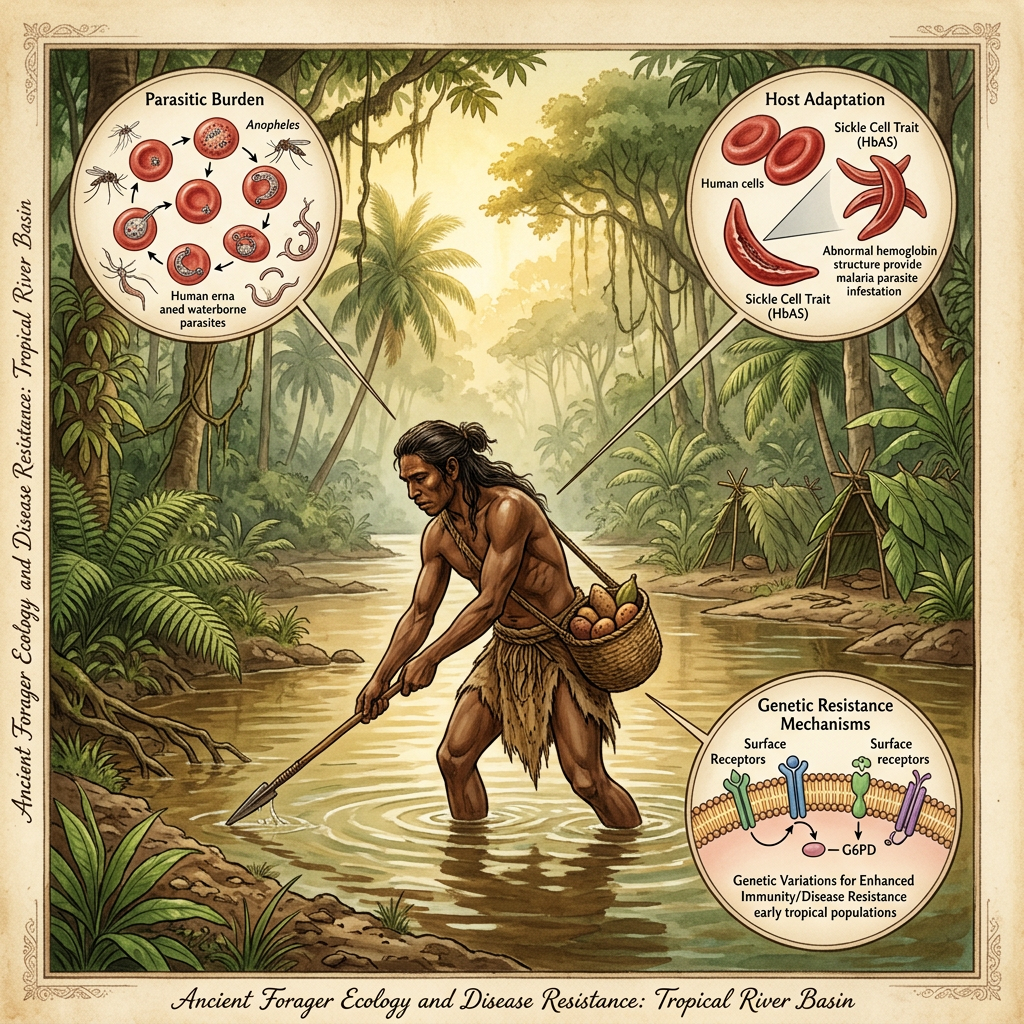
In a landmark study appearing in Cell, researchers have sequenced the DNA of 11,000-year-old remains found in the Lufira Basin of the Democratic Republic of the Congo. The analysis revealed the earliest known genetic signatures of the APOL1 gene variants, which provide modern humans with innate resistance to certain subspecies of Trypanosoma, the parasite responsible for African sleeping sickness.
The findings indicate that this evolutionary 'arms race' between humans and parasites was already well established in the early Holocene. The study provides a map of how ancient foragers adapted to the dense, pathogen-rich riverine environments of Central Africa, offering a rare glimpse into the paleogenomic landscape of a region where high acidity often destroys ancient biological material.