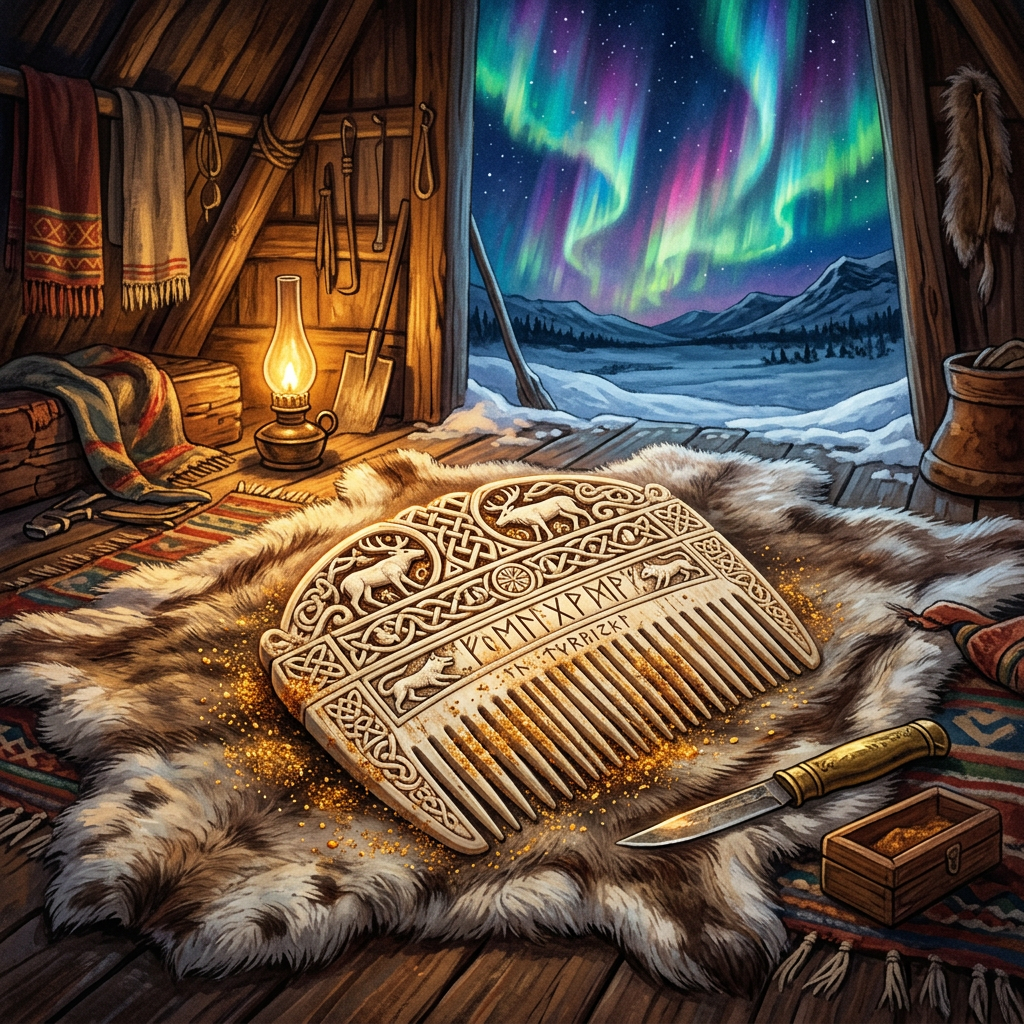
On the frigid shores of the Kola Peninsula, archaeologists have discovered "amber-dusted" walrus-ivory combs dating back 4,000 years. These elaborate tools were used during the "Aurora-Greeting" festivals, where community members engaged in ritual grooming and communal dance to honor the appearance of the northern lights during the height of the polar night.
The presence of amber—likely traded from the Baltic—demonstrates the extensive reach of prehistoric trade networks into the Arctic. These festivals represent some of the earliest known cultural responses to the celestial phenomena of the high north, marking the heritage of the indigenous groups that navigated these extreme environments through shared celebration and artistic expression.