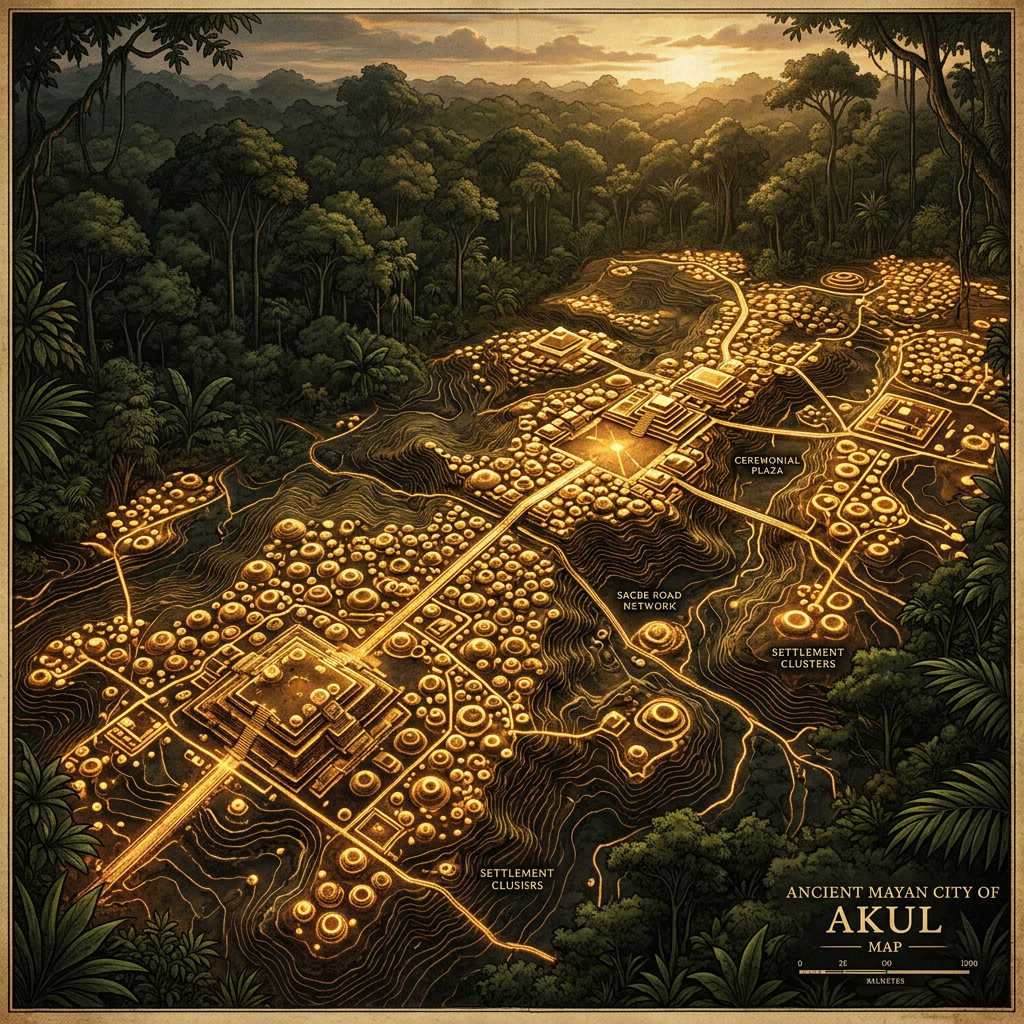
Advanced LiDAR (Light Detection and Ranging) surveys conducted over the remote Rio Bec region of Mexico have identified an expansive industrial landscape previously hidden by dense rainforest canopy. The survey revealed over 200 large-scale lime kilns connected by a network of paved causeways to specialized limestone quarries. This mega-complex appears to have been the primary source of the white plaster used to construct the monumental pyramids and plazas of the Terminal Classic Maya period.
The findings suggest that the Maya maintained a highly centralized and environmentally demanding industry to support their architectural ambitions. Dr. Elena Rodriguez, an archaeologist specializing in Mesoamerican urbanism, stated that the scale of the kiln network indicates a massive workforce and a significant depletion of local timber for fuel, potentially contributing to the regional ecological stress of the 9th century. The LiDAR data also mapped several administrative centers situated at the intersections of the transport roads, used to oversee the distribution of lime to distant cities.