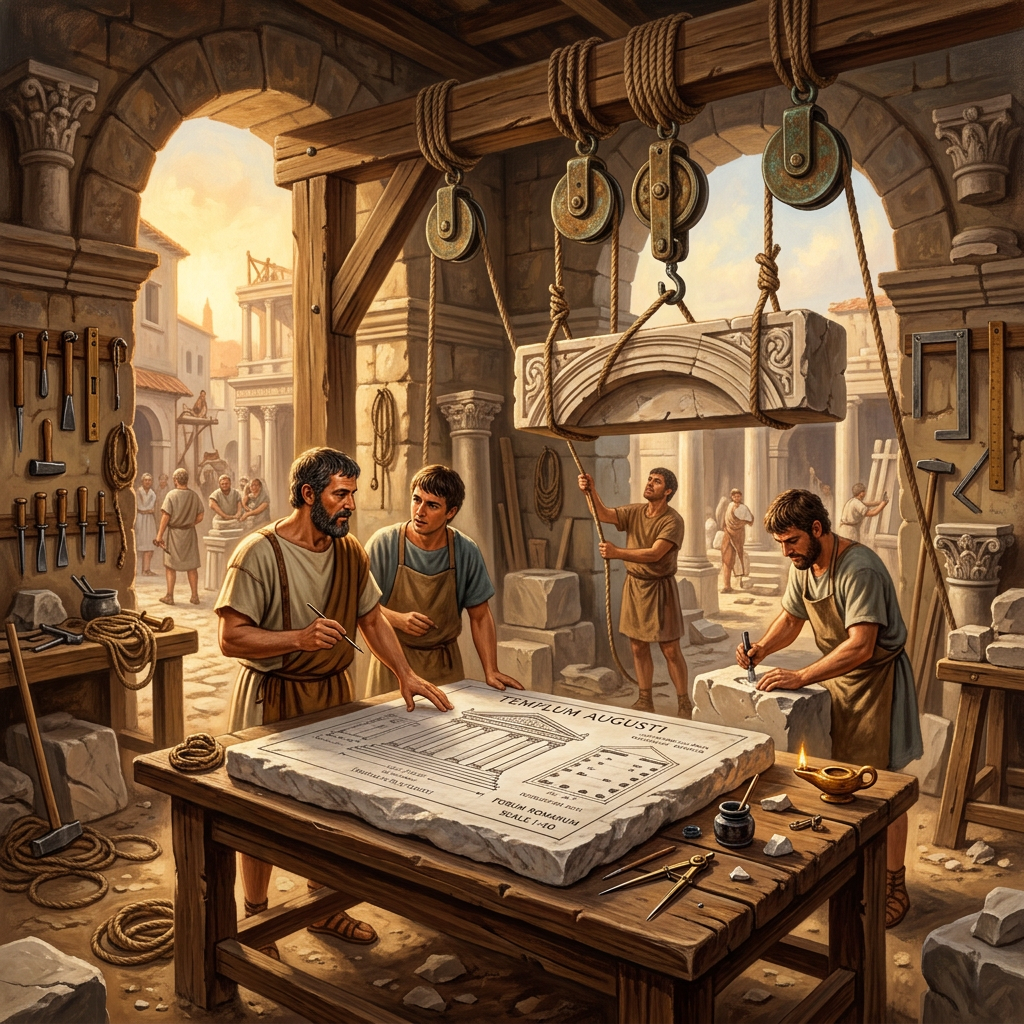
Archaeologists excavating the outskirts of Nîmes, France, have uncovered a unique administrative and industrial facility dating to the 2nd century CE. The site has been identified as an Imperial Bureau of Pulley-Systems, responsible for the standardization and repair of heavy lifting equipment used by Roman legions. The discovery includes several well-preserved bronze templates for gear-cutting and a cache of lead-stamped pulleys designed for use in massive crane systems and siege engines.
This facility represents one of the few known instances of a specialized technical bureau dedicated to mechanical standardization across the Roman Empire. Professor Jean-Luc Girard noted that the presence of detailed technical specifications etched into limestone slabs at the site proves that Roman engineering was far more standardized than previously thought. The bureau's location near the Via Domitia allowed it to serve as a logistics hub, distributing high-quality mechanical components to frontier fortifications along the Rhine and the Mediterranean coast.