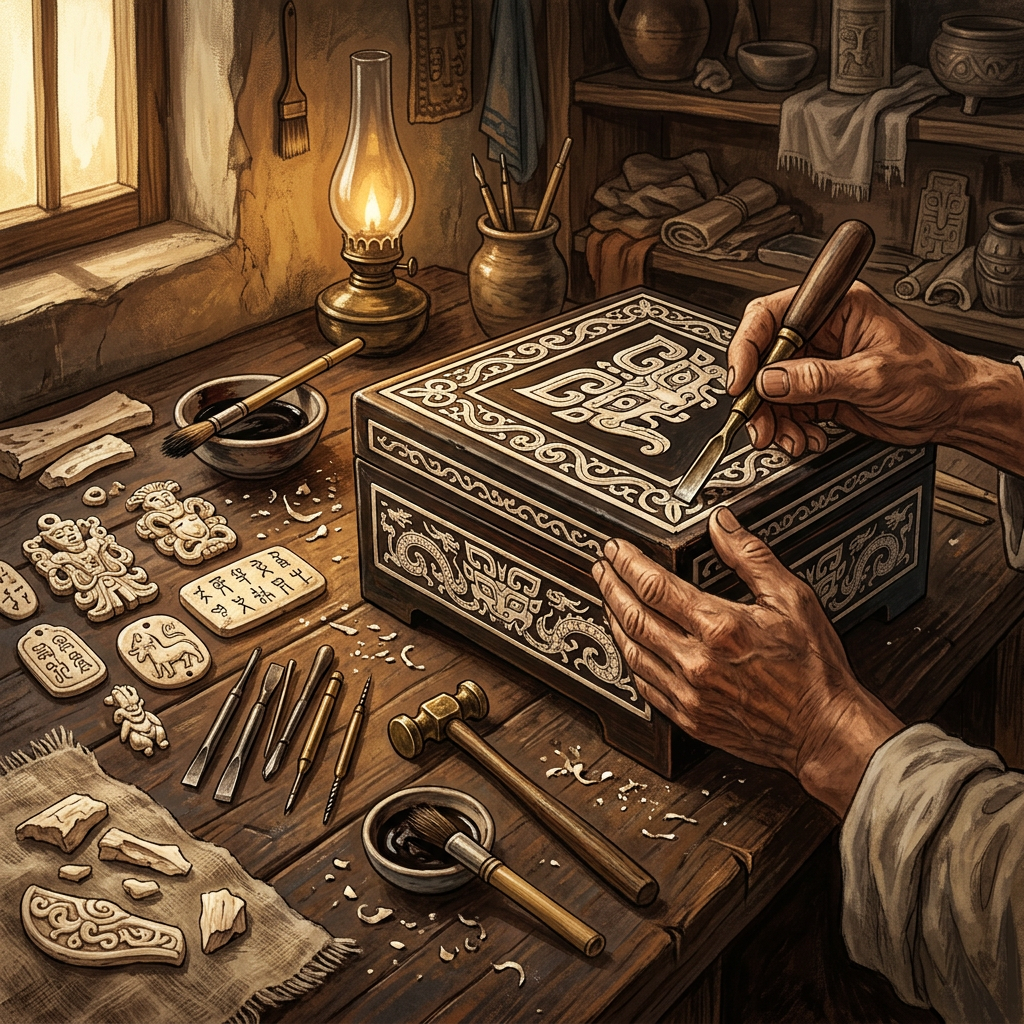
A significant archaeological breakthrough in Zhengzhou, China, has revealed a massive Early Shang Dynasty workshop dedicated to the production of high-elite bone-inlay furniture and ritual objects. The site yielded thousands of fragments of polished bovine and cervid bone, some intricately carved with early glpyhs and geometric patterns. Most notably, archaeologists recovered a set of specialized bronze microsurgical tools, including fine-tipped needles and scrapers used to set the bone pieces into wooden surfaces with millimeter precision.
The excavation, conducted by the Henan Institute of Cultural Relics, suggests that the Shang court maintained a highly skilled class of artisans whose work was restricted to the imperial household. Li Wei, the lead researcher, emphasized that the discovery of these precision tools challenges existing theories regarding the limitations of Bronze Age craftsmanship. The presence of a dedicated drainage system within the workshop indicates that water-cooling was used during the fine carving process to prevent the bone from cracking, a remarkably advanced technique for the 15th century BCE.