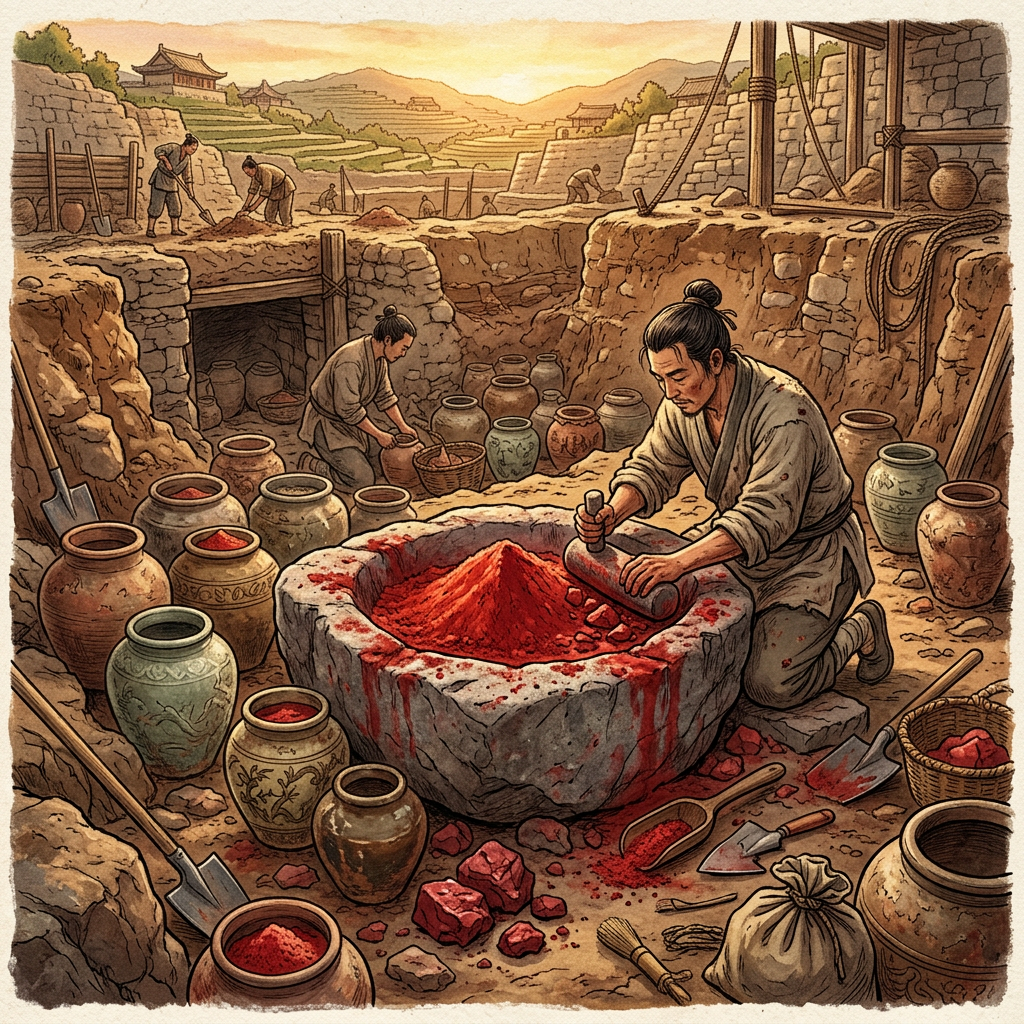
Excavations within the inner city walls of Zhengzhou have revealed a specialized industrial wing dedicated to the production of high-grade cinnabar ink for the early Shang royalty. The site contains a series of fine-grinding stone basins and ceramic storage vats still bearing the deep red pigment used in elite rituals and administrative records. Rare fragments of silk found in the vicinity show traces of early calligraphy, suggesting that ink production was a tightly controlled imperial monopoly.
This discovery pushes back the timeline for specialized pigment chemistry in China, showing that the Shang elite had already mastered the process of refining mercury-based ores into stable writing fluids by the 16th century BCE. The laboratory's location near the palace suggests that the act of recording and divination was as much an industrial process as it was a spiritual one.