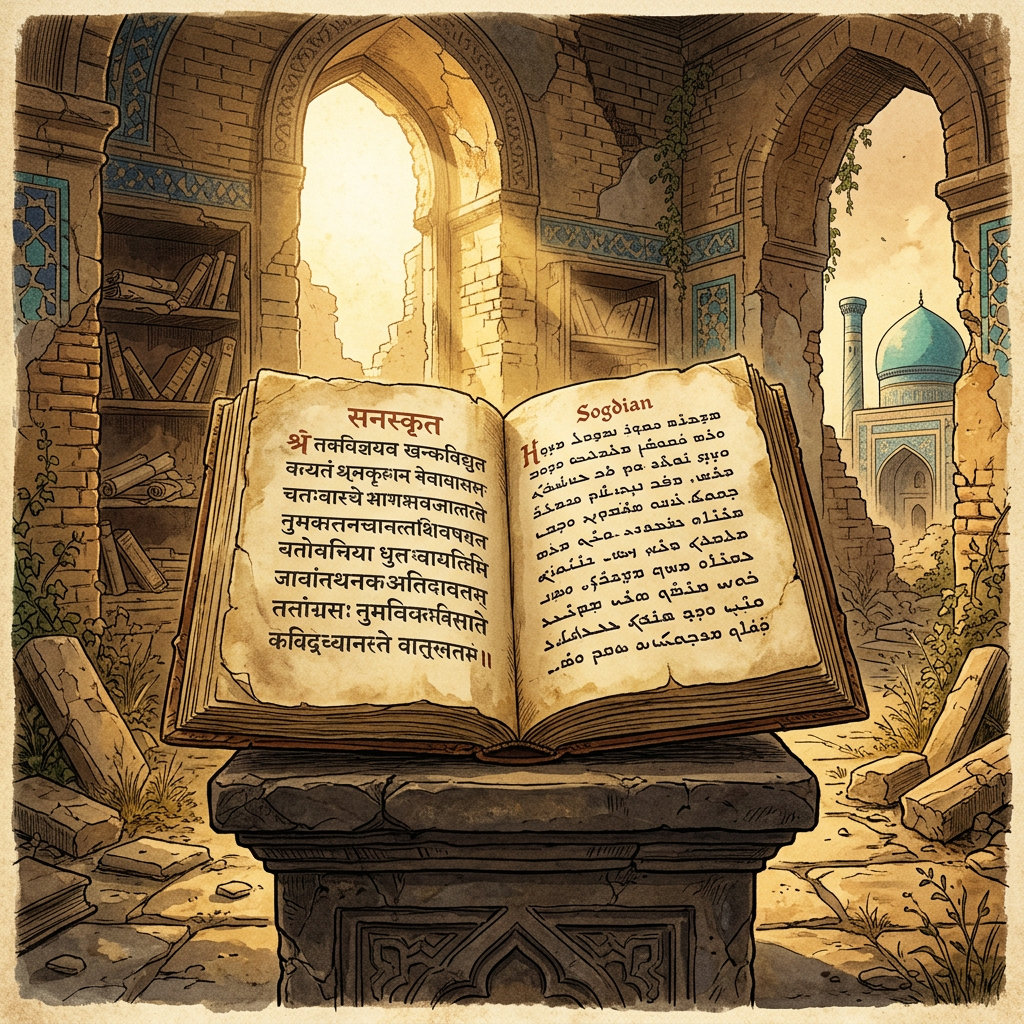
Archaeologists working at a newly unearthed library complex in Samarkand, Uzbekistan, have discovered a rare 11th-century manuscript titled 'Yukti-Pratyaya'. The text, written in a sophisticated hybrid of Sanskrit and Sogdian, provides a revolutionary look at how logical frameworks from the Indian subcontinent were adapted and debated by scholars along the Silk Road. Unlike traditional medieval texts, this manuscript focuses specifically on the 'logic of belief formation' and the epistemological value of cultural exchange.
Scholars believe the 'Yukti-Pratyaya' was authored by a traveling Vedic logician who engaged with local Persian and Islamic philosophers. The text outlines a unique system of dialectical synthesis, suggesting that truth is not a static destination but a process of iterative conceptual refinement. This discovery is expected to reshape our understanding of the intellectual fluidity that characterized Central Asian academic centers during the Middle Ages.