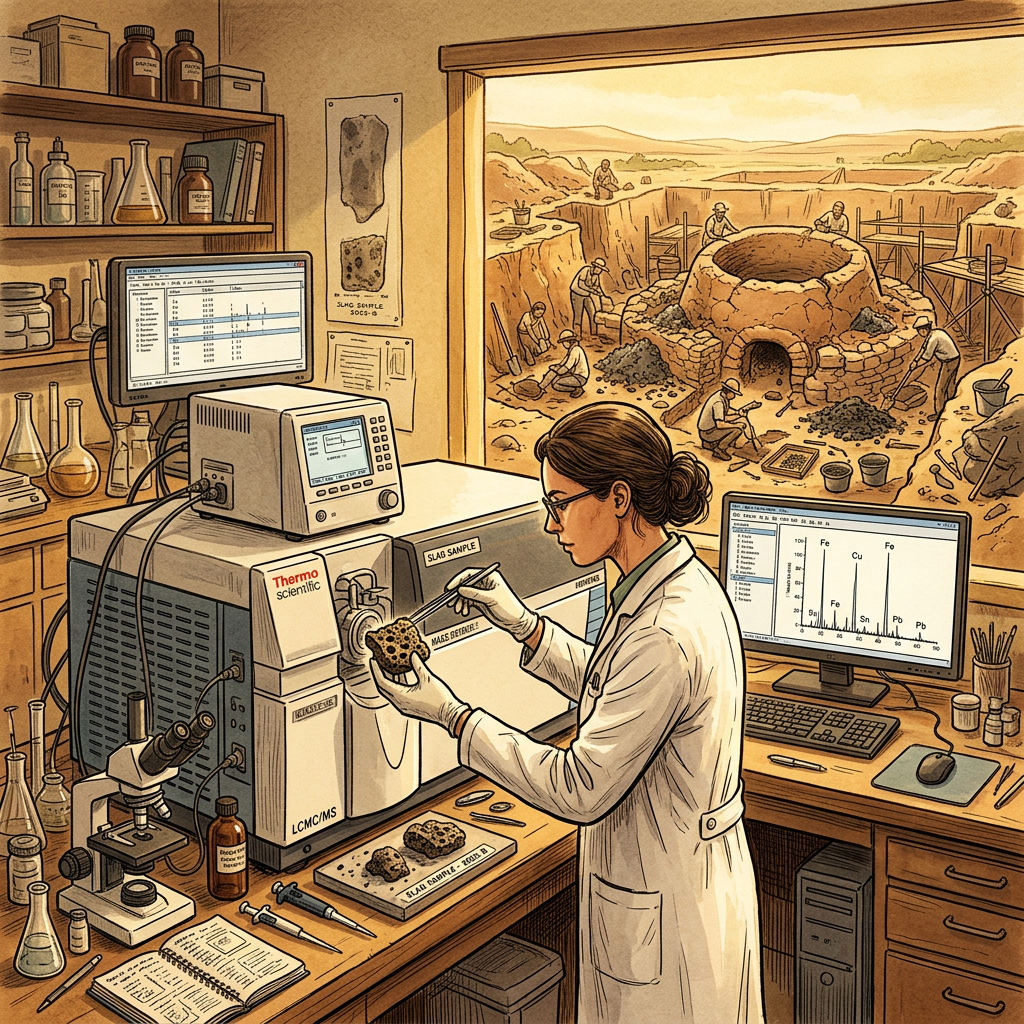
Research appearing in Science Advances introduces an innovative application of hafnium-lutetium isotopic dating to metallurgical byproducts found in the southern Ural Mountains. By analyzing the decay of isotopes within the crystalline structures of copper slag, researchers have successfully refined the chronology of early smelting sites to sub-decadal precision. The results push back the established timeline for high-temperature metallurgy in the region by nearly two centuries, placing the technological transition at approximately 2400 BCE.
This dating breakthrough confirms that the Sintashta-Petrovka cultural complex possessed advanced smelting capabilities far earlier than previously estimated. The study suggests that the rapid development of chariot technology and high-purity bronze tools was fueled by a mastery of thermal management that spread through trade networks into Central and South Asia, significantly impacting the socio-political landscape of the Early Bronze Age.