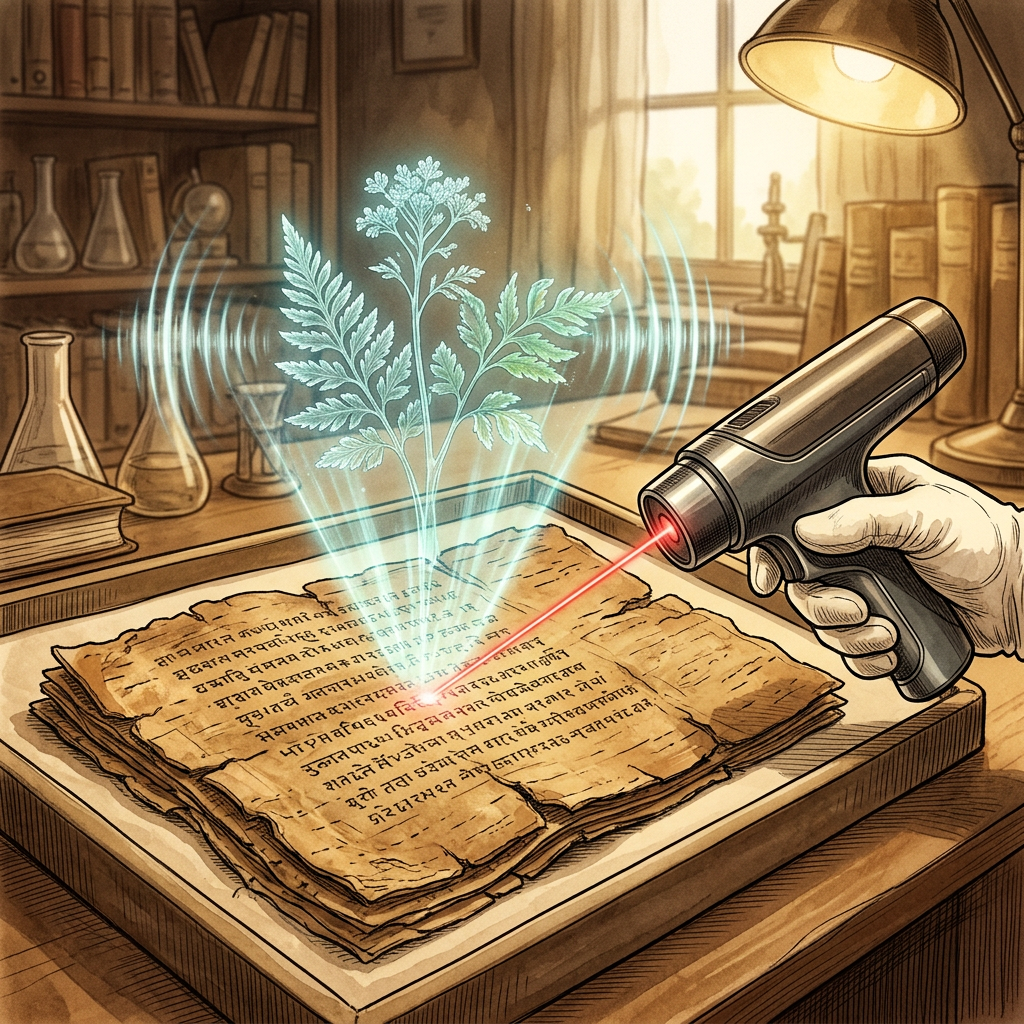
A specialized AI project at the University of Kashmir has successfully deciphered a series of severely damaged birch-bark fragments in the Sharada script. The texts contain lost treatises detailing ancient Indian theories of plant-acoustics and the use of specific resonant frequencies to influence the growth and flowering cycles of medicinal flora. This suggests that 7th-century scholars had developed a precursor to bio-acoustics, documenting how vibrations from Vedic chanting or metallic instruments could synchronize with plant biological rhythms.
The deciphered fragments, part of the historically significant Gilgit Manuscript cache, outline the systematic classification of sound frequencies as they relate to different plant species. Researchers believe these findings could validate long-held oral traditions regarding the efficacy of 'Ragas' in traditional Indian horticulture, providing a scientific baseline for further research into ancient botanical sciences.