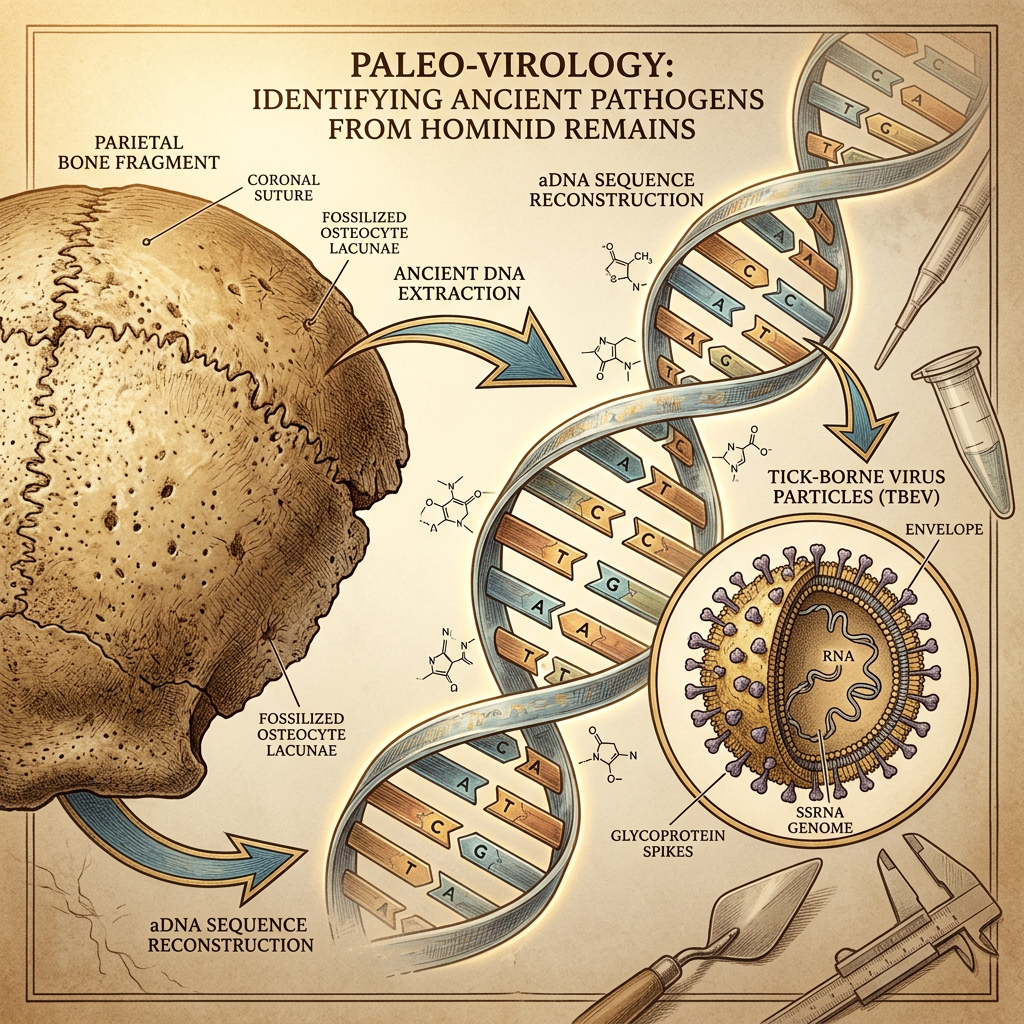
A breakthrough paleogenomic study published in Nature Genetics has analyzed the skeletal remains of over fifty individuals associated with the Corded Ware Culture in the Baltic region. The research reveals a significant pulse of genetic selection targeting immune system receptors specifically associated with flavivirus defense mechanisms. This finding suggests that early pastoralist communities migrating into Northern Europe faced intense selective pressure from tick-borne pathogens during the initial forest-clearing stages of the Neolithic transition.
The study, led by a multinational team of geneticists, utilized high-coverage shotgun sequencing to pinpoint specific alleles that became prevalent within just a few generations. These genetic adaptations provided enhanced resilience against tick-borne encephalitis, a discovery that reshapes our understanding of how ancient pathogens influenced the migratory success and population dynamics of Indo-European lineages as they expanded into new ecological niches.