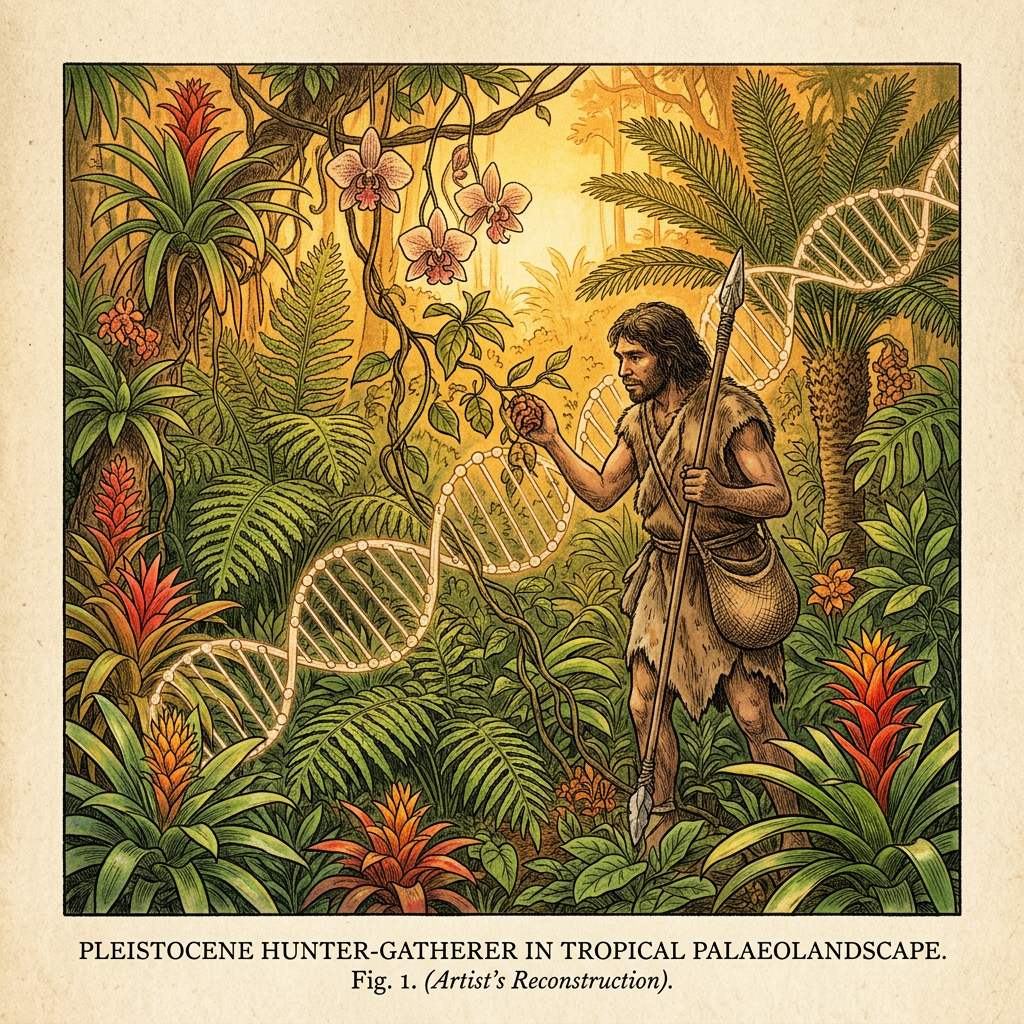
A major anthropological breakthrough has emerged from a genetic analysis of skeletal remains found in the Orinoco Basin of South America. The study, published by Paleogenomics Today, identifies a distinct "ghost" lineage that diverged from early American migrants approximately 15,000 years ago. This population shows unique genetic markers associated with the liver's ability to metabolize alkaloidal compounds found in specific tropical plants, indicating a highly specialized dietary adaptation to the rainforest environment.
This discovery provides evidence of a far more complex population structure in the Pleistocene Americas than previously hypothesized. The "Orinoco Ghost" lineage likely lived in relative isolation, developing niche biological defenses against toxic flora while maintaining a sophisticated knowledge of tropical botany. The research underscores the incredible speed at which early human groups adapted to the diverse and challenging ecosystems of the Southern Hemisphere.