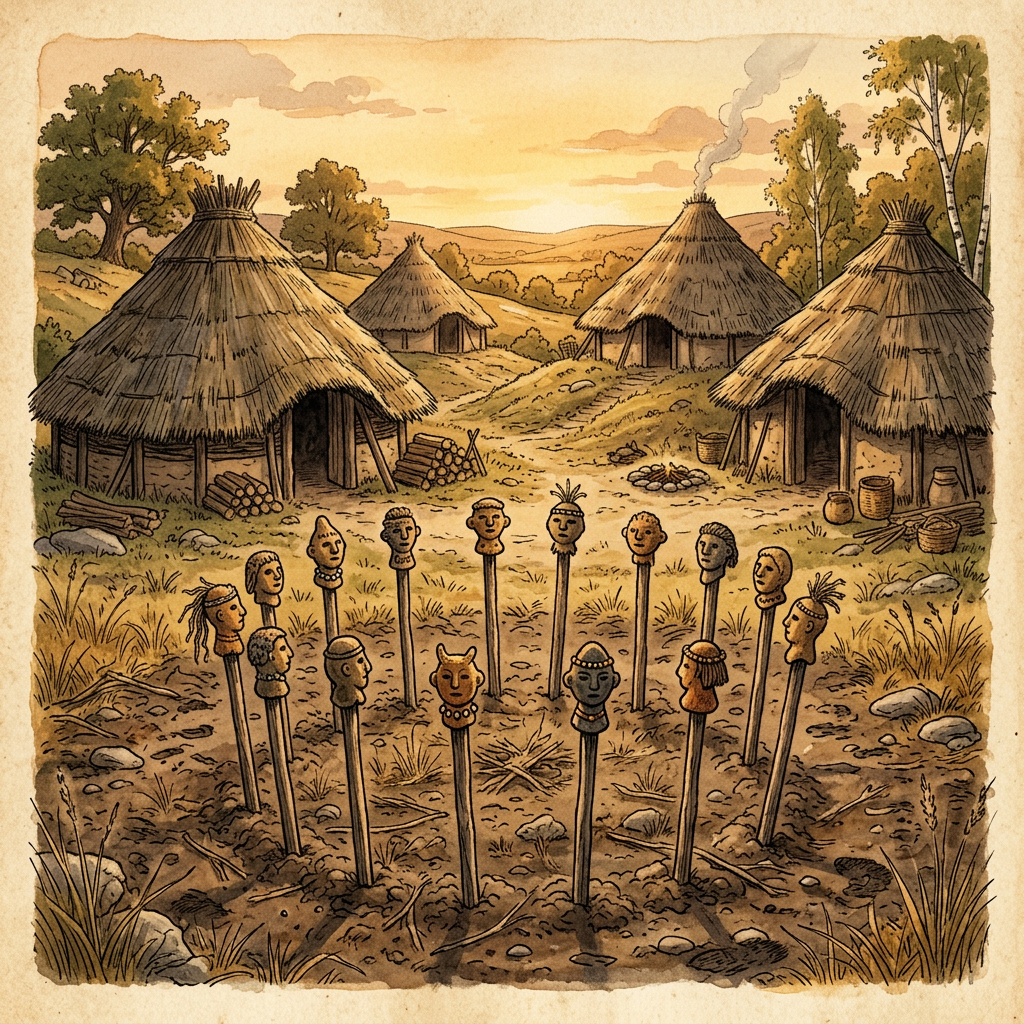
In the Tohoku region of northern Japan, excavation at a Late Jomon Period site has led to the discovery of dozens of "clay-tipped" wooden spirit sticks. Analysis of the surrounding soil suggests these were used during a "Festival of the First Sprout," an early spring rite intended to wake the earth spirits after the harsh northern winter.
The sticks were found arranged in concentric circles around a central hearth, with traces of wild nut and berry resins indicating communal feasting. This archaeological evidence pushes back the origins of Japan's seasonal matsuri traditions, showing that communal rituals aimed at environmental harmony were a cornerstone of indigenous culture for over five millennia.