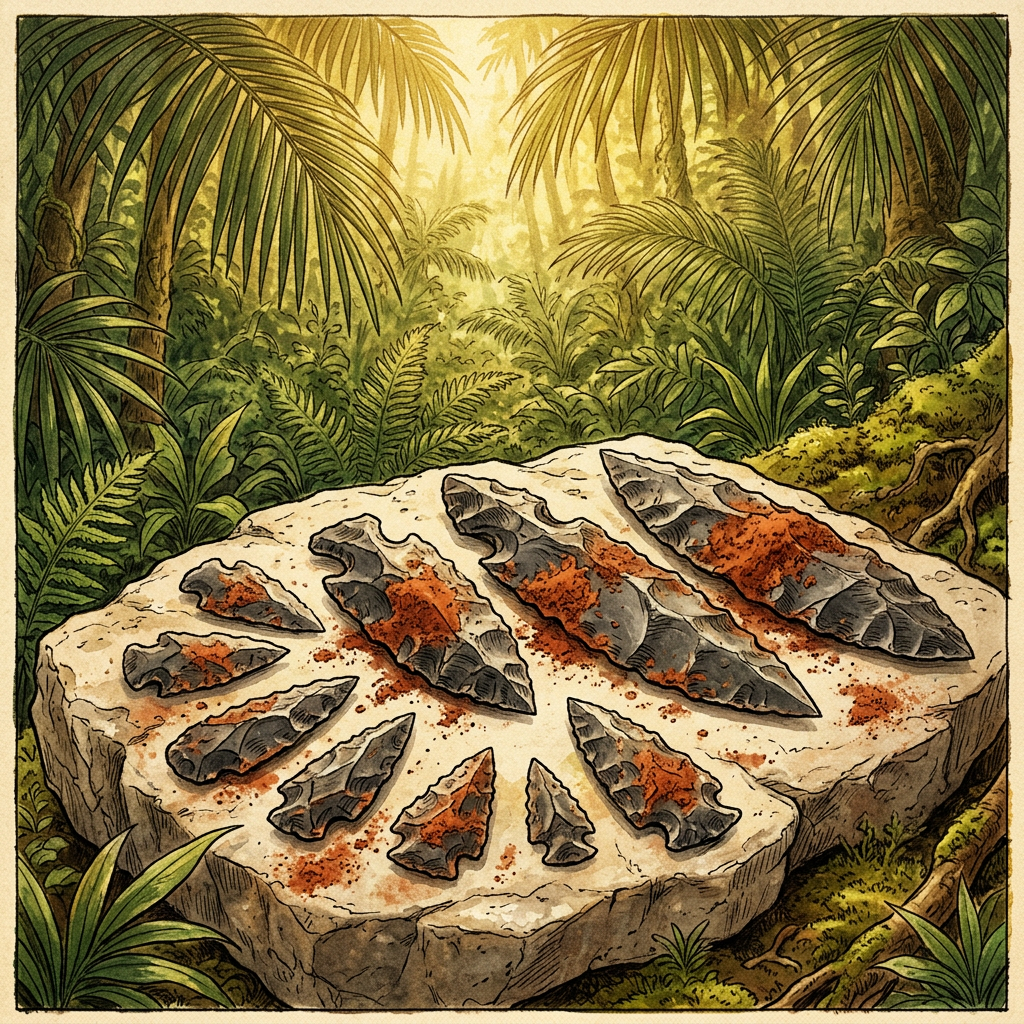
Deep within the Petén Basin of Guatemala, a team of researchers has uncovered a series of "cinnabar-stained" flint caches buried beneath a newly identified ceremonial plaza. These flints, carved into the likeness of warrior-gods and jagged shields, are thought to be the foundational relics for the "Festival of the Obsidian Shield," a multi-day Maya event celebrating military prowess and the protection of the city-state.
The presence of mercury-based pigments on the flints indicates that the items were ritually "activated" through fire and blood before being interred. This find suggests that ancient Maya festivals were not merely agricultural but served as vital political and martial displays, reinforcing social hierarchies through shared ritualistic spectacle during the dry season.