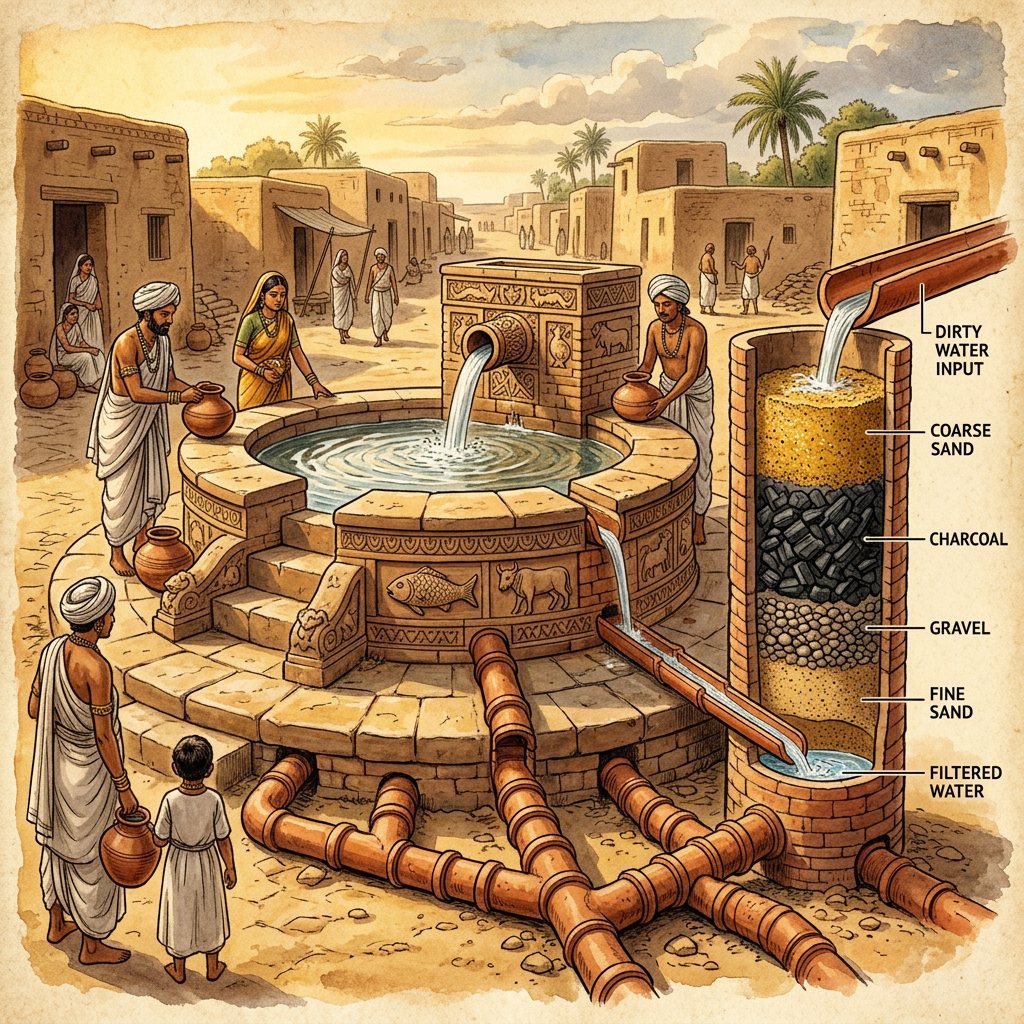
Archaeologists excavating the western outskirts of Mohenjo-Daro have announced the discovery of a sophisticated public-fountain network dating back to approximately 2500 BCE. The system features a series of interconnected terracotta pipelines that fed into circular stone basins equipped with advanced silt-filtration chambers, suggesting a high level of municipal concern for clean drinking water in the ancient Indus Valley.
The excavation team from the Global Archaeological Research Initiative noted that the fountains were strategically placed in residential courtyards and public squares. This finding provides new insights into the hydraulic engineering capabilities of the Harappan civilization, moving beyond simple drainage to complex, pressure-fed water distribution systems for public use.