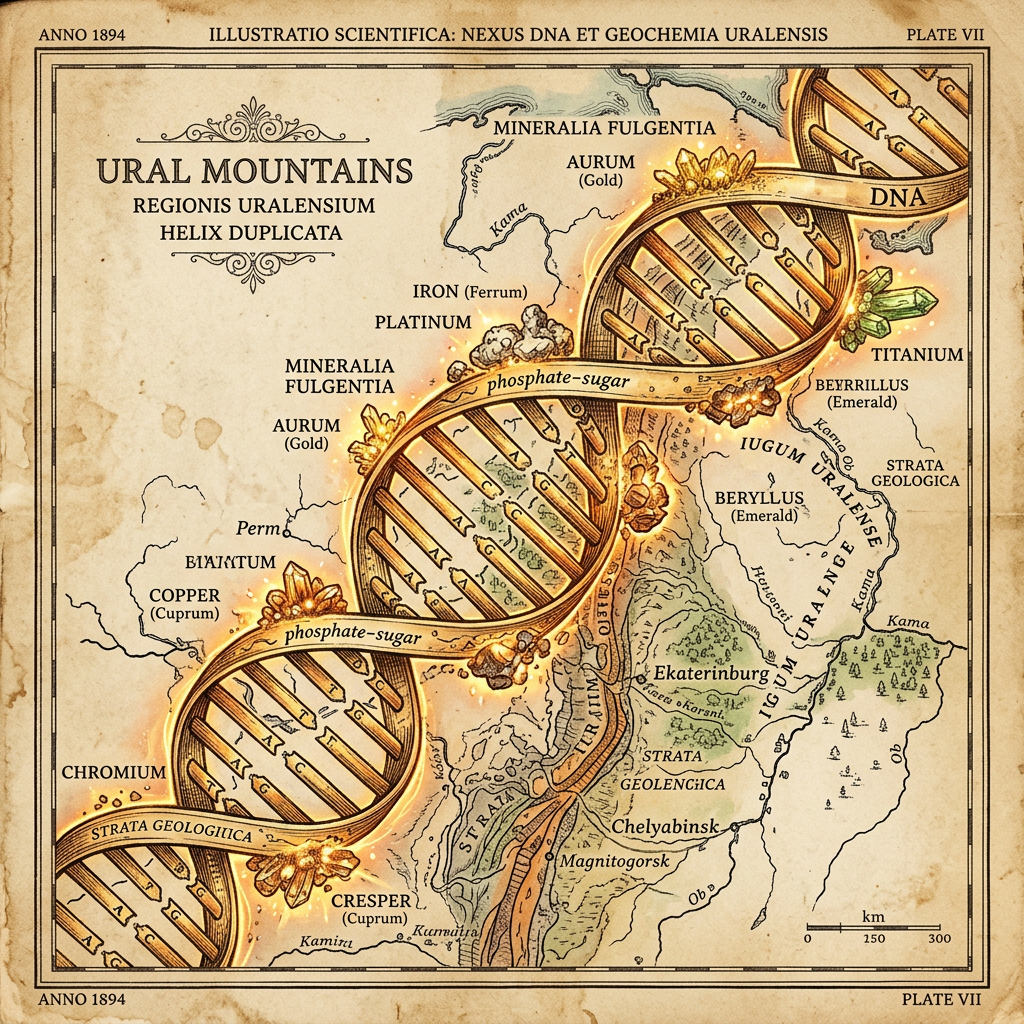
In a groundbreaking paper published in Science Advances, a team of paleogenomicists has completed the DNA sequencing of human remains found in the Ural-Caspian corridor dating back to the late Pleistocene. The findings highlight a previously unknown genetic mutation in the SLC30A10 gene, which provided these early hunter-gatherers with an evolutionary defense against manganese toxicity and endemic soil pathogens common in the mineral-rich steppes.
This study marks the first time that anthropological research has identified a specific genetic adaptation to soil mineralogy in such an ancient population. The researchers suggest that this genetic signature allowed these groups to thrive in environments that would have been toxic to other contemporaneous lineages, providing a new perspective on how ancient humans utilized geochemical niches during the post-glacial expansion.