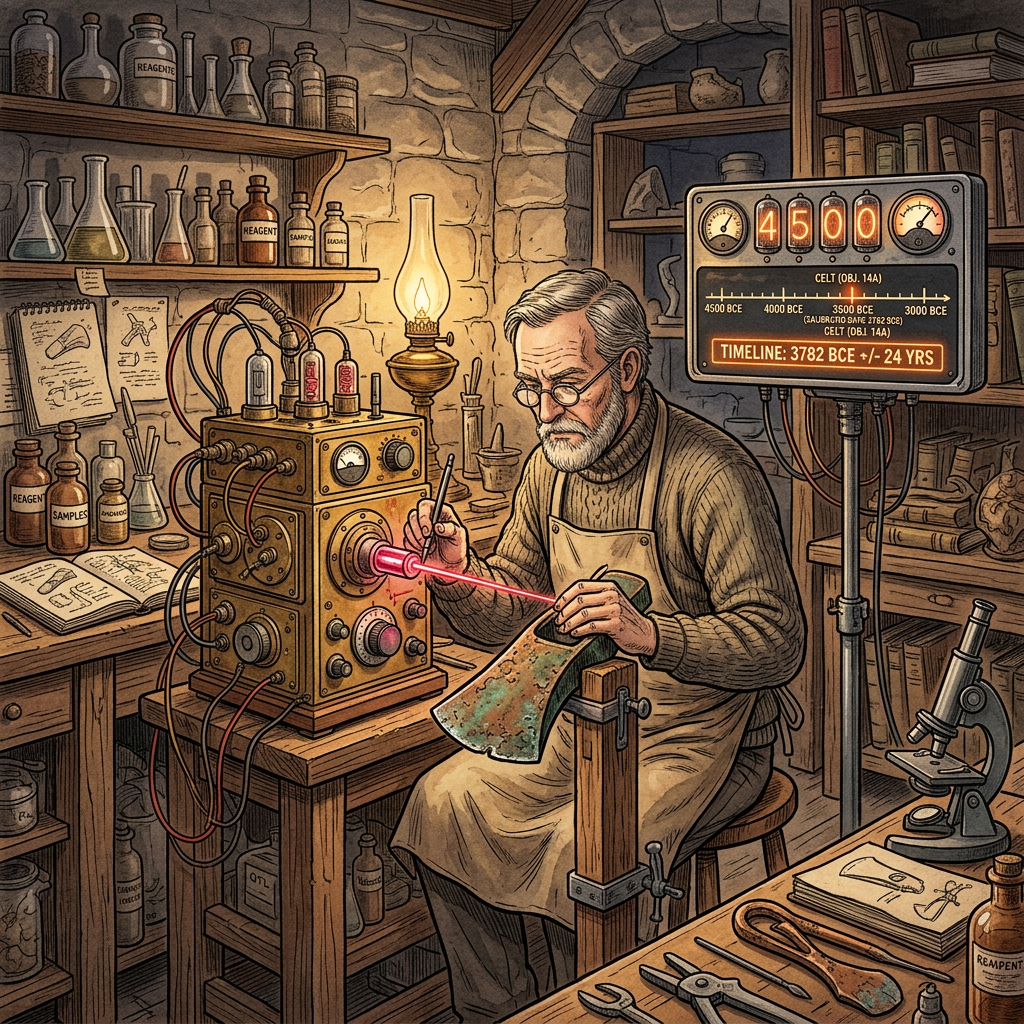
A new archaeological dating technique known as Quantum-Tunnelling Luminescence (QTL) has successfully refined the timeline of the enigmatic 'Copper Hoard' culture in the Ken River Valley. Unlike standard carbon-14 dating, QTL measures the sub-atomic electron displacement in ceramic kilns caused by intense heat, allowing for a sub-centennial precision that was previously impossible for non-organic artifacts.
The results, published in the Archaeological Science Review, place the peak of copper smelting in the region at 3200 BCE, nearly five centuries earlier than previous estimates. This shift in the chronological framework suggests that the transition to complex metallurgy in the Indian subcontinent was an independent and localized innovation that coincided with the earliest stages of urban expansion in the Indus-Ghaggar system.