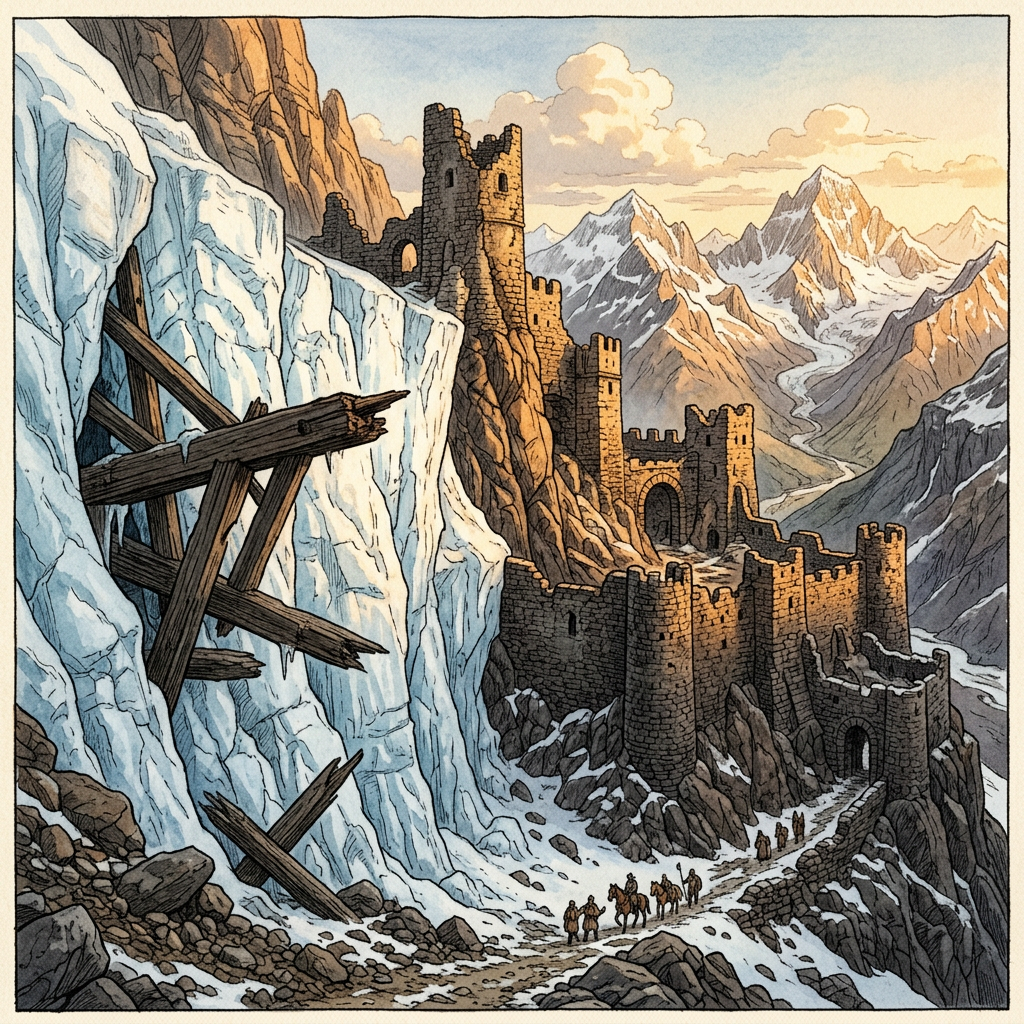
Melting ice in the high-altitude passes of the Hindu Kush has revealed a series of exceptionally well-preserved stone and timber fortifications dating to the 8th-century Karkota Dynasty. Due to the rapid retreat of the Kafni glacier, archaeologists have recovered intact wooden gateways, iron arrowheads, and even fragments of wool-lined leather armor. These structures are believed to have served as strategic outposts to monitor and tax high-pass traffic between Central and South Asia.
The preservation is so pristine that dendrochronological analysis of the timber beams has allowed scientists to pinpoint the exact years of construction to between 745 and 760 CE. These outposts provide the first physical evidence of the Karkota Empire's northern reach, showcasing an advanced military architecture designed to withstand extreme cold and high-altitude sieges. Researchers also found caches of dried apricots and grains, offering a rare glimpse into the dietary habits of mountain garrisons during the early medieval period.
This discovery is part of a growing field of climate archaeology, where receding glaciers act as a ticking clock for researchers to salvage history before exposure to the air causes rapid decay. The Afghan and Pakistani ministries of culture have requested emergency UNESCO assistance to document the site before further environmental degradation occurs.