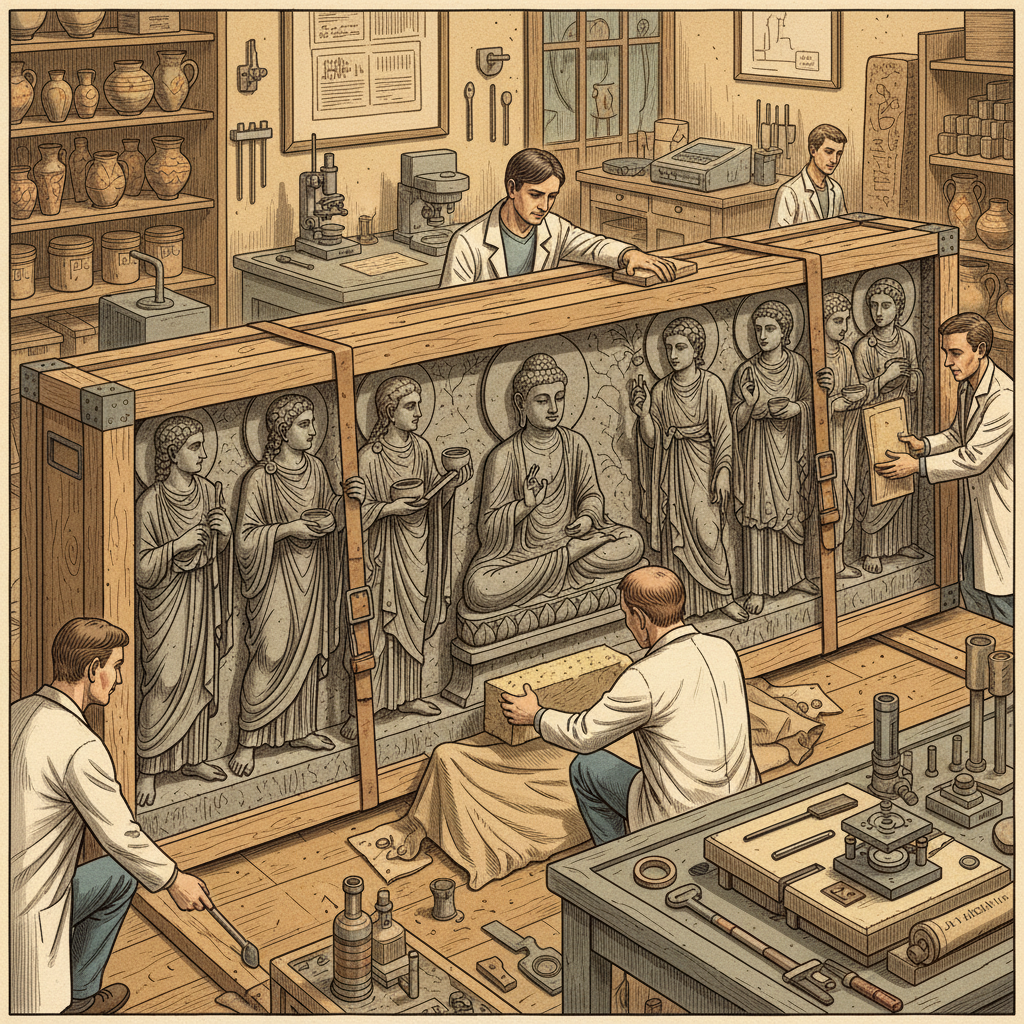
The Louvre Museum in Paris has successfully completed the repatriation of a collection of 2nd-century CE Gandharan stone reliefs to the National Museum of Pakistan in Islamabad. These intricate schists, which depict scenes from the life of the Buddha, were identified as having been illegally exported during the mid-20th century. The return ceremony marks the conclusion of a decade-long legal and diplomatic negotiation between the French and Pakistani governments.
The reliefs are considered masterpieces of Greco-Buddhist art, characterized by the unique fusion of Classical Greek aesthetics with Indian religious iconography. Curators noted that the returned pieces include a rare panel depicting the Great Departure of Prince Siddhartha, notable for its exceptionally fine detail in the drapery and facial expressions. The artifacts will be the centerpiece of a newly renovated Gandhara gallery in Islamabad, aimed at promoting regional cultural pride and tourism.
This repatriation is part of the Louvre's new 'Shared Heritage Initiative', which seeks to resolve contested provenance through research-led restitution rather than litigation. The French Ministry of Culture stated that this move underscores their commitment to the UNESCO 1970 Convention and serves as a gesture of international cultural cooperation to combat the illicit trade in antiquities.