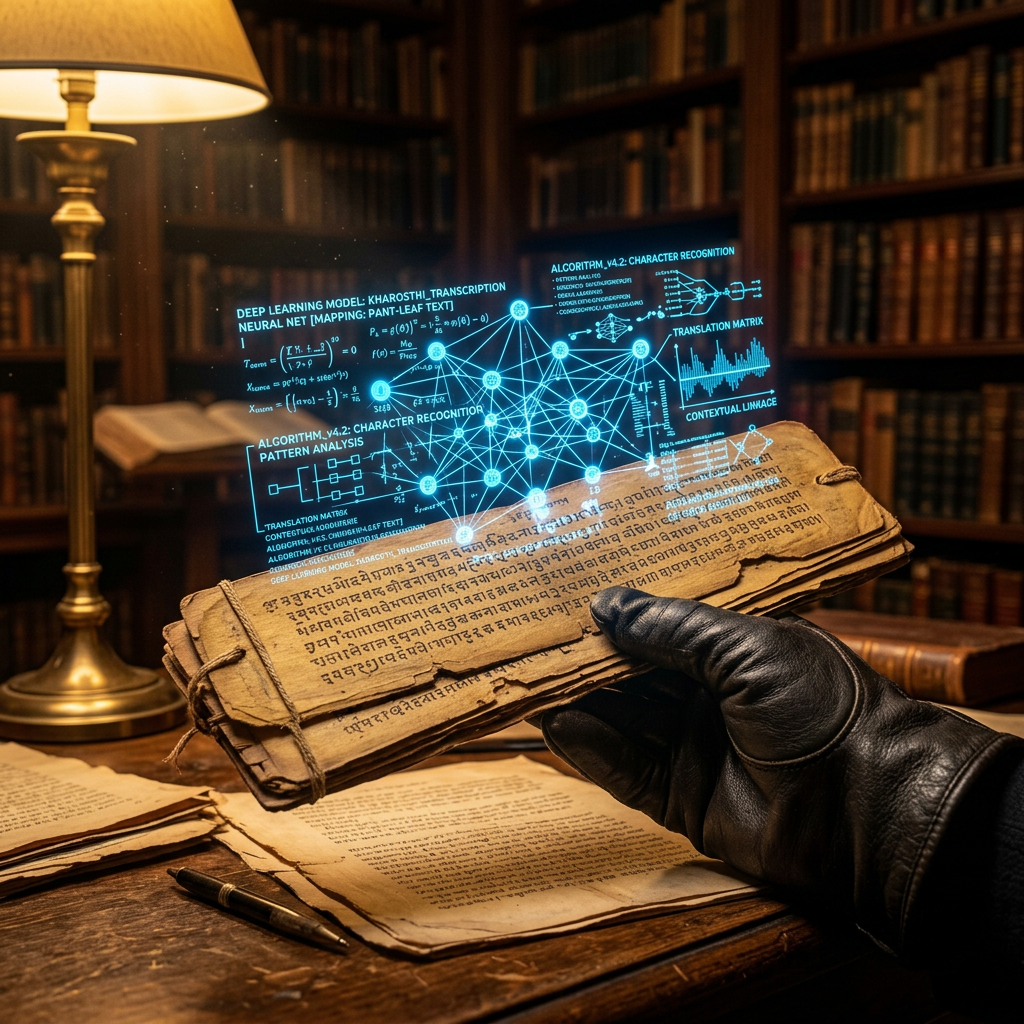
A breakthrough in computational paleography has occurred in Rajasthan, where AI models specialized in medieval Sanskrit scripts have successfully reconstructed fragments of a 11th-century manuscript titled Yukti-Makaranda. Found in a neglected private collection in Alwar, the text belongs to a radical branch of the Nyaya school of logic. It explores the paradoxical nature of "non-referential truths"—logical propositions that remain valid even when the physical objects they describe do not exist or have ceased to be.
The Yukti-Makaranda (Nectar of Logic) challenges traditional medieval epistemologies by proposing that the structure of a thought is more "real" than the object of the thought itself. Scholars suggest this discovery could reshape our understanding of the intellectual diversity in Northern India just before the late medieval transition. The AI-assisted reconstruction has allowed for the recovery of nearly 80% of the original logical syllogisms presented in the manuscript.