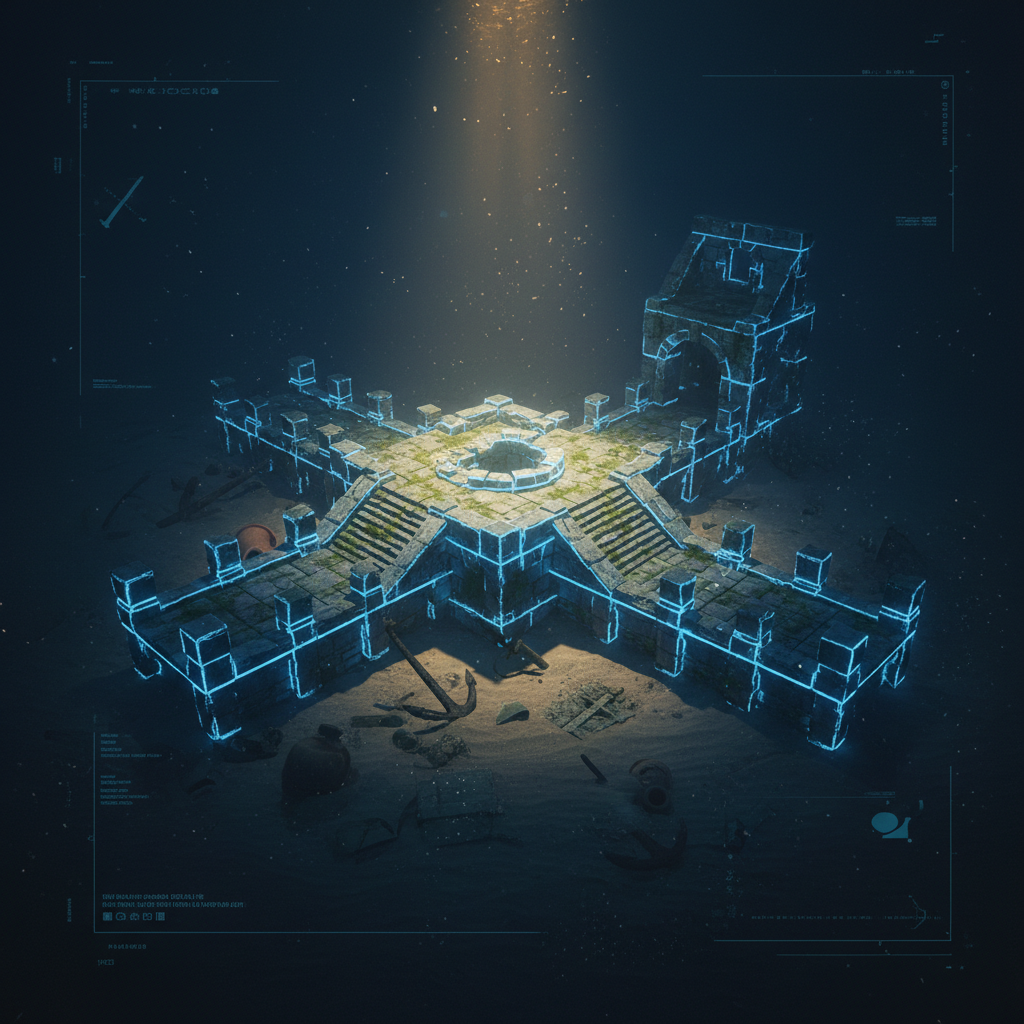
Using a revolutionary 'Quantum-Lidar' scanning system capable of penetrating deep, sediment-heavy waters, researchers have mapped a massive network of submerged stone docks and warehouses beneath Lake Van in Turkey. The structures date to the Bagratid Armenian period (9th–11th centuries) and indicate that the lake served as a significantly more vital commercial artery for the northern Silk Road than historical records previously suggested.
The digital reconstruction reveals a sophisticated harbor layout with stone piers and staircases designed to accommodate fluctuating water levels. This technology allows for non-invasive archaeological surveys of underwater heritage sites that were previously inaccessible due to depth or poor visibility. The findings are expected to prompt a major reassessment of medieval trade logistics in the Anatolian highlands.