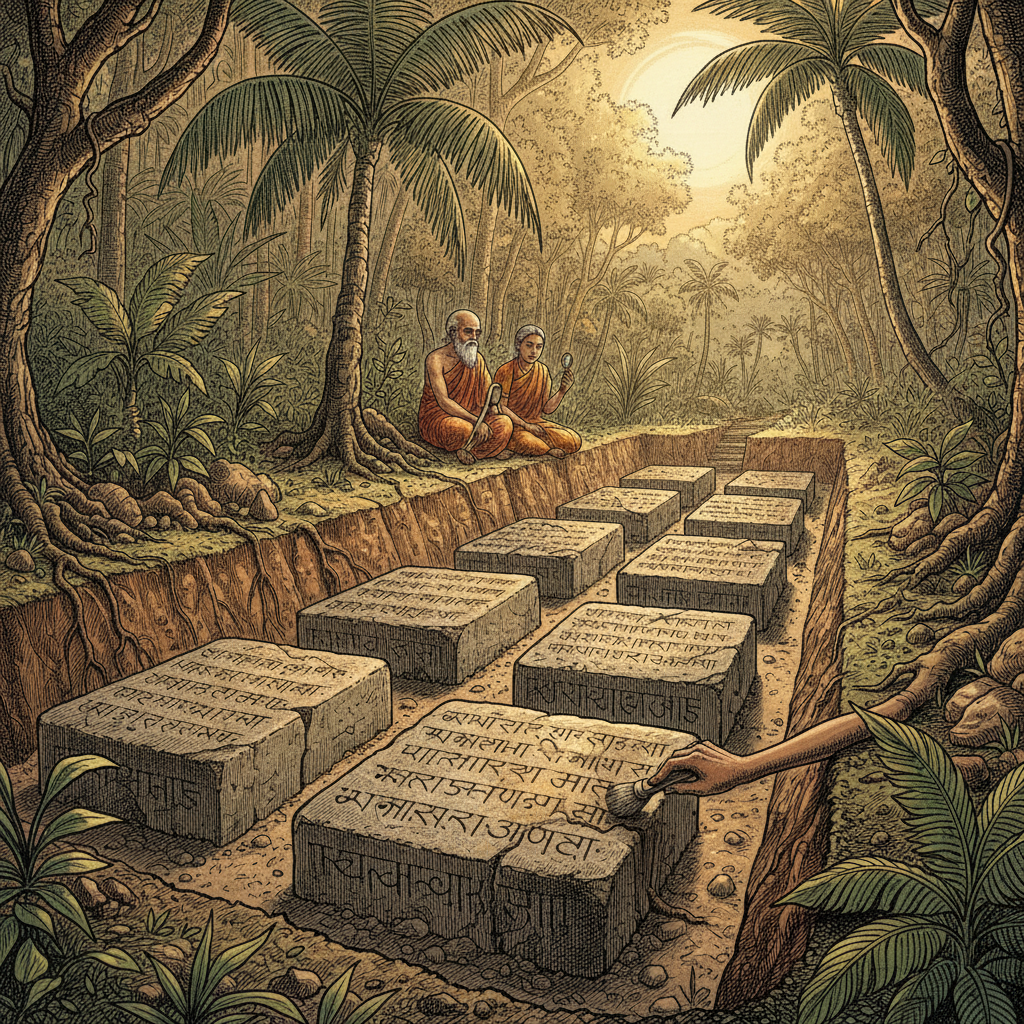
Archaeologists have discovered a set of limestone stelae in the Godavari Delta inscribed with a philosophy called 'Samatva-Kriti-Setu', or the 'Bridge of Balanced Action'. Dating to the 4th century BCE, the inscriptions outline a Philosophy of Moral Symmetry, which argues that every individual action creates a 'vibrational debt' that must be balanced through reciprocal acts of social service and ethical rectitude. This system posits that the health of a civilization is measured by the 'symmetry' of its collective actions.
The text provides early evidence of the synthesis between Vedic Rta (cosmic order) and southern ethical traditions, emphasizing 'Samatva' (equanimity) as a practical social virtue rather than just an internal meditative state. These inscriptions are among the earliest records of a systematic philosophy of social responsibility in the Deccan, offering new insights into the pre-Mauryan intellectual landscape of Southern India.