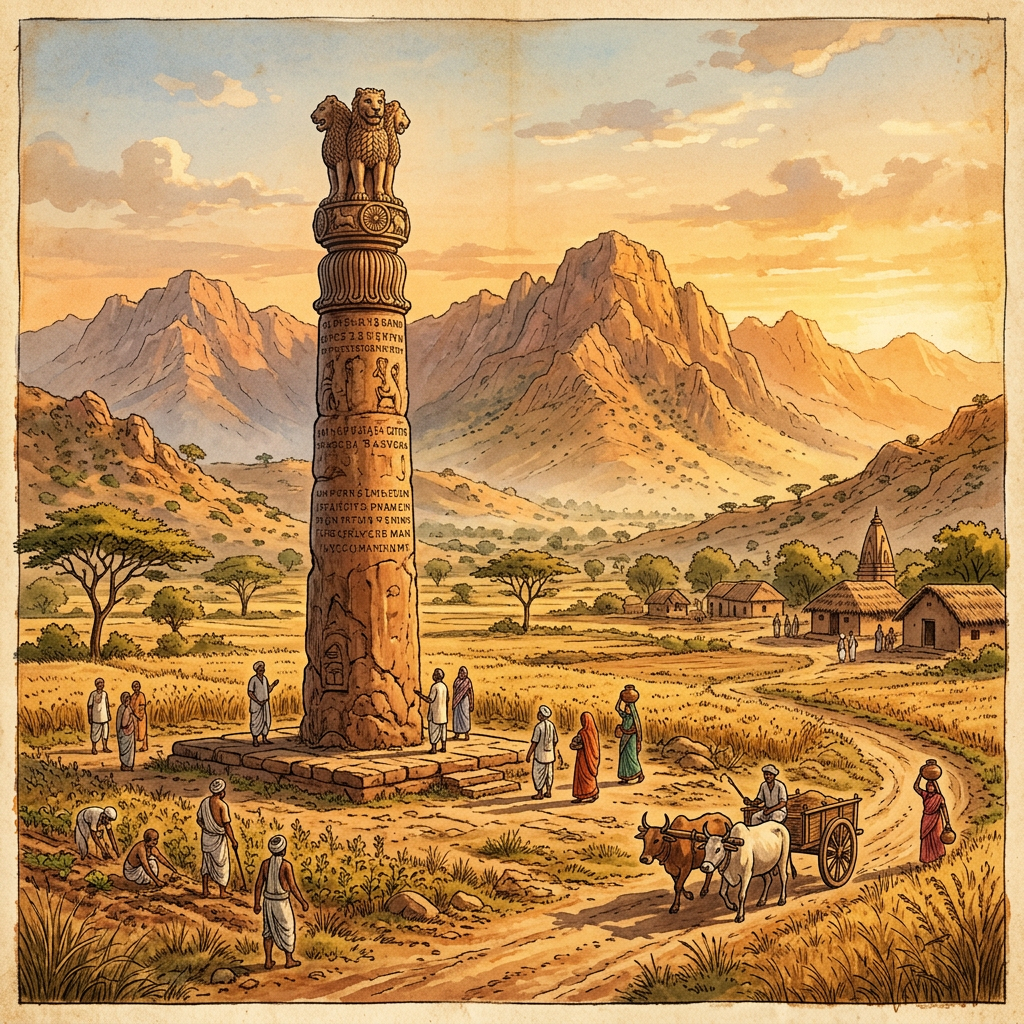
Recent excavations in the Bundelkhand region of Madhya Pradesh have revealed a series of sandstone inscriptions belonging to the late Gupta period. The inscriptions detail a philosophical system known as 'Dharma-Kshana-Viveka', or the 'Discernment of the Ethical Moment'. This school of thought emphasizes that virtue is not a fixed social code but a series of precise, intuitive actions performed in the 'Eternal Now' (Kshana), providing a unique proto-existentialist perspective within the broader Sanatan Dharma tradition.
The text challenges the notion of predetermined morality, suggesting instead that the 'Ethical Moment' requires a total presence of mind to align individual action with the cosmic rhythm (Rta). Experts believe these inscriptions served as a guide for local administrators and judges, illustrating how high-level Vedic metaphysics were applied to practical governance and judicial decision-making. The discovery highlights the regional diversity of ancient Indian ethical systems during a period of significant cultural transition.