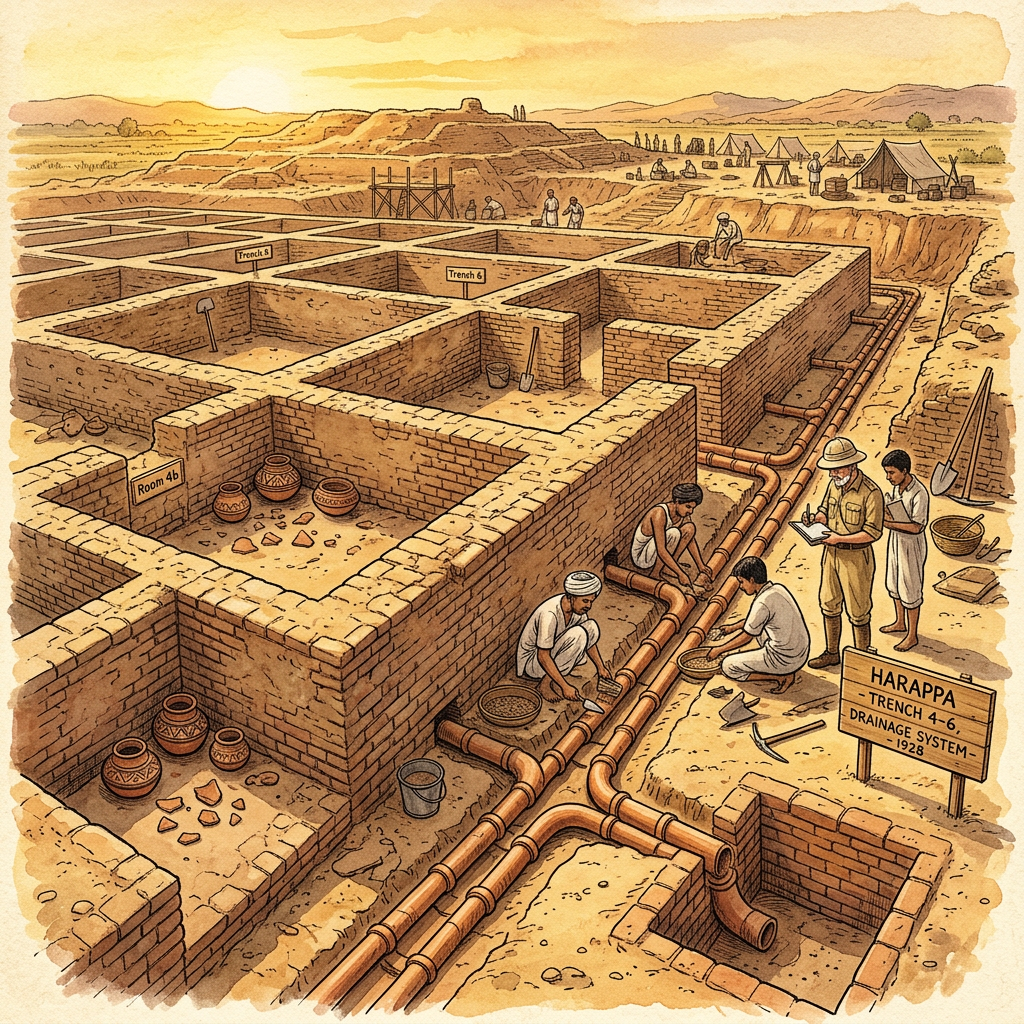
Excavations at a newly identified sector of the Rakhigarhi archaeological site have unearthed what researchers are calling a Harappan Public Health Bureau. This administrative complex, dating to the Mature Harappan phase around 2500 BCE, contains a series of specialized rooms for the storage of medicinal resins and mineral-based disinfectants. The presence of standardized terracotta drainage inspection ledgers suggests that Harappan urban planners implemented rigorous sanitary audits to mitigate the spread of waterborne diseases within the densely populated city.
The discovery includes several calcined clay tablets detailing the allocation of aromatic fumigants used in public assembly areas. Bio-archaeological analysis of soil samples from the site has revealed high concentrations of sulfur and neem-leaf residue, indicating a systematic approach to pest control and environmental hygiene. This find provides the first direct archaeological evidence of a dedicated state institution focused on epidemiology and the biological safety of urban environments in the Indus Valley Civilization.