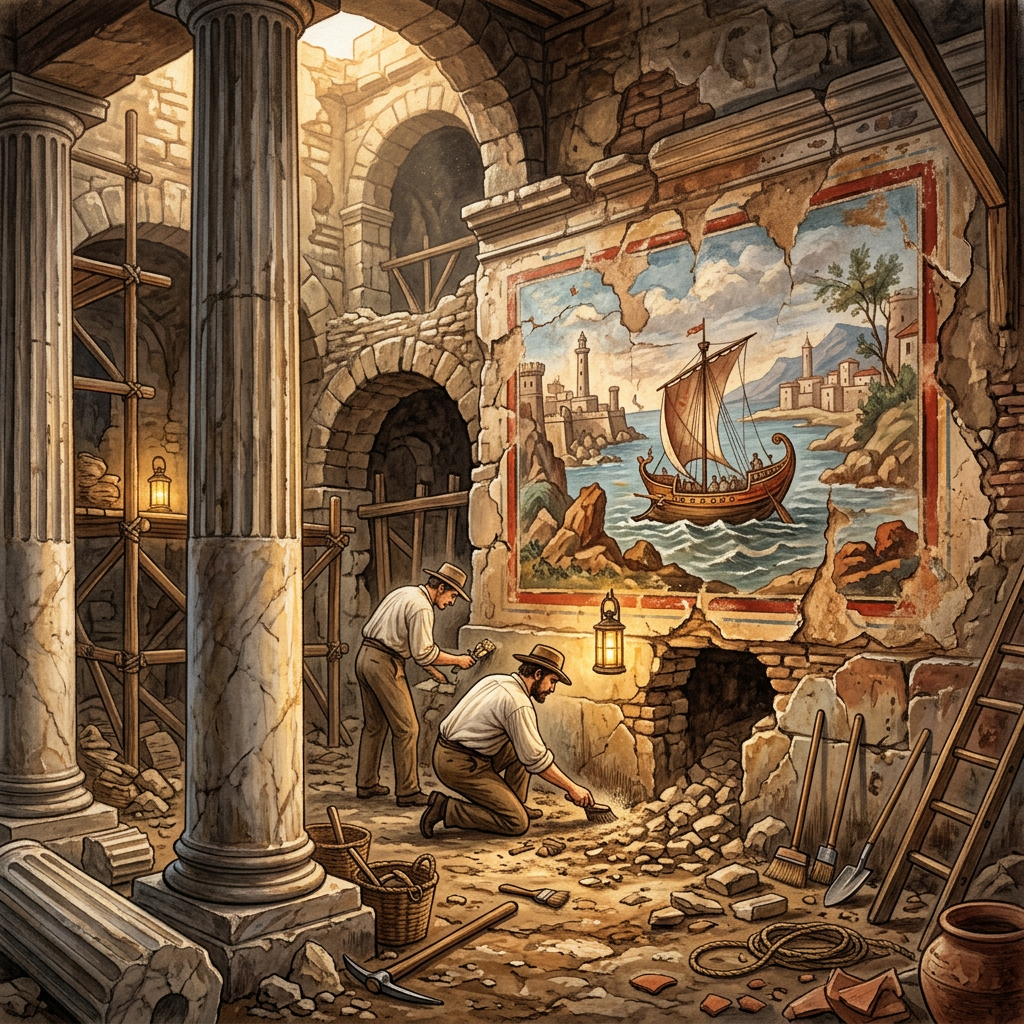
During urban redevelopment in the French city of Narbonne, archaeologists have struck a remarkable find: a Roman Merchant’s Guild Hall (Schola) dating to the mid-2nd century CE. The building served as the headquarters for a powerful association of maritime traders and remains virtually intact beneath the modern street level. The central assembly hall features a stunning floor-to-ceiling fresco that depicts a stylized map of Mediterranean trade routes, including major ports of call from Alexandria to Gades, marked with the specific commodities traded at each location.
Beyond its artistic value, the site has yielded a vast collection of lead shipping tags and inscribed marble tablets recording the bylaws of the guild. These records offer a detailed glimpse into the social and economic safety nets provided to Roman mariners, including insurance funds for shipwrecked crews and standardized pricing for grain transport. The Narbonne Schola is now considered the best-preserved example of a commercial corporate headquarters from the Roman Empire, highlighting the city's role as a vital logistics hub for the province of Gallia Narbonensis.