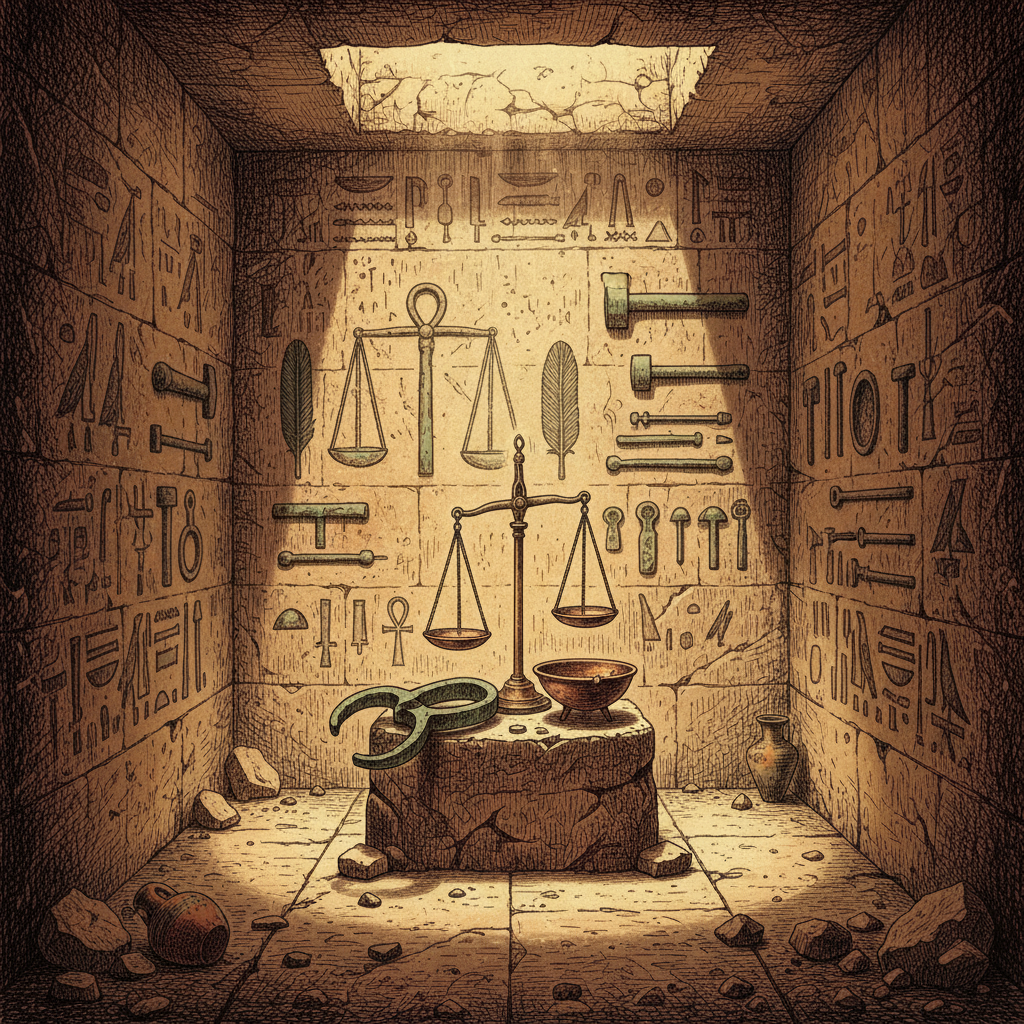
Archaeologists working in the ancient Egyptian capital of Memphis have announced the discovery of an exceptionally well-preserved tomb belonging to a high-ranking official from the 26th Dynasty. The tomb occupant, identified as the High Superintendent of the Royal Mint, played a critical role during a period of significant economic transition in Egypt. The discovery is particularly notable for the recovery of several intact bronze templates used for the standardization of early currency and metal weights, providing a rare look into the administrative precision of the Late Period.
The burial chamber features vivid polychrome reliefs depicting the weighing of precious metals and the oversight of royal foundries. Experts from the Ministry of Tourism and Antiquities state that the inscriptions detail the rigorous quality control protocols required for state-sponsored bullion. Alongside the sarcophagus, researchers found a collection of specialized balanced scales and stone weight-standards inscribed with the royal cartouche of Pharaoh Psamtik I, highlighting the centralized nature of Egypt's fiscal reforms during the 7th century BCE.