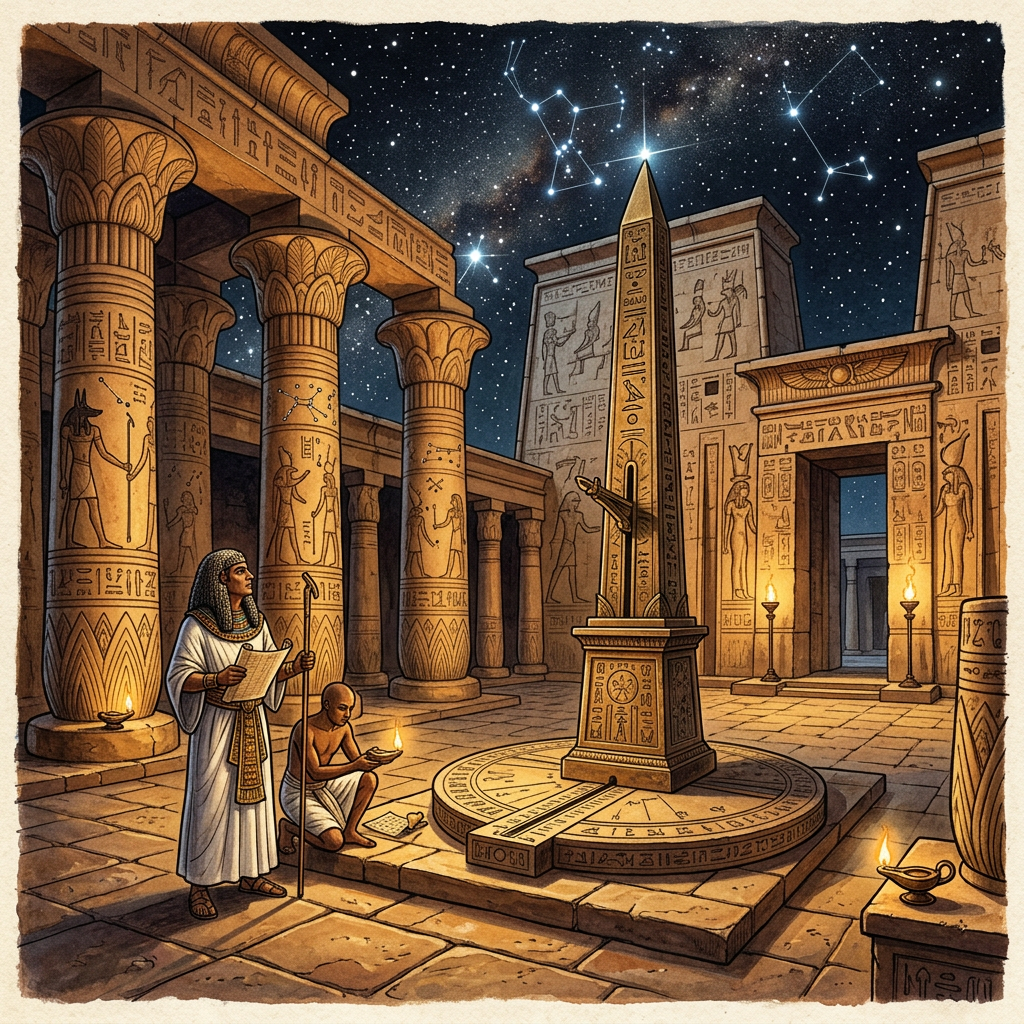
Archaeologists working in the ancient capital of Memphis have announced the discovery of an intact residence belonging to a High Astronomer of the Late Period. The structure is remarkably well-preserved, featuring a dedicated observation court equipped with bronze gnomons and stone-carved stellar alignment markers used to track the movement of the star Sirius and the constellations of the northern sky.
Excavations revealed a small archive room containing lead tablets inscribed with hieratic calculations of lunar phases and solar cycles. These records suggest the astronomer was responsible for synchronizing religious festivals with celestial events, providing new evidence of the sophisticated integration of stellar observation into the administrative and spiritual life of the 26th Dynasty. The presence of specialized sighting tools indicates a high level of precision in calculating the exact moment of the annual Nile inundation.