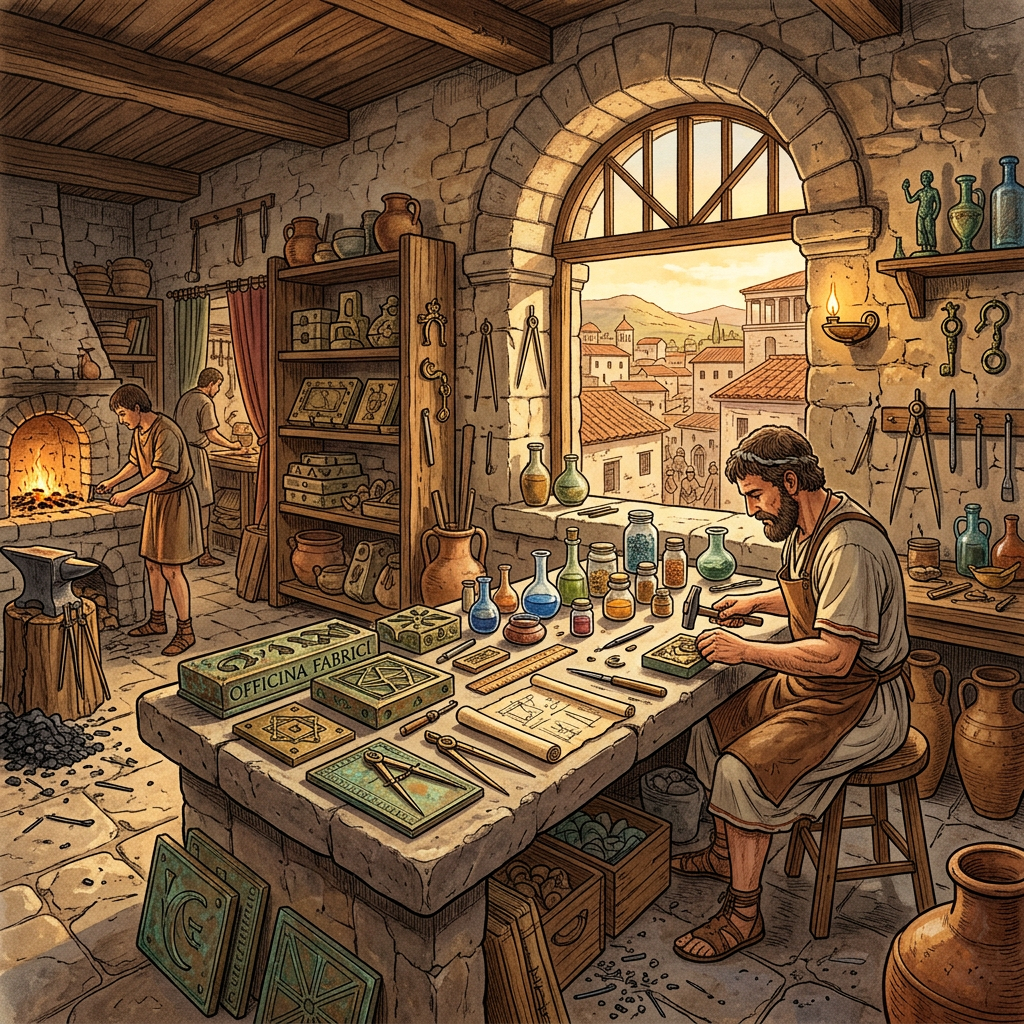
Archaeologists in the port city of Corinth have unearthed a unique Roman administrative building identified as an Imperial Bureau of Nautical Chronometry. The site contains a workshop area for the manufacture of clepsydrae (water clocks) and marine sand-glasses, essential tools for navigation and timekeeping at sea. Discovery of intact bronze templates used for casting standardized glass bulb frames indicates a high degree of state-regulated production.
In addition to manufacturing tools, the team found a registry of certified chronometers issued to merchant fleets operating between the Aegean and the Western Mediterranean. This establishment highlights the Roman Empire's commitment to maritime safety and the rigorous standardization of navigational technology that facilitated the flow of global trade during the Pax Romana.