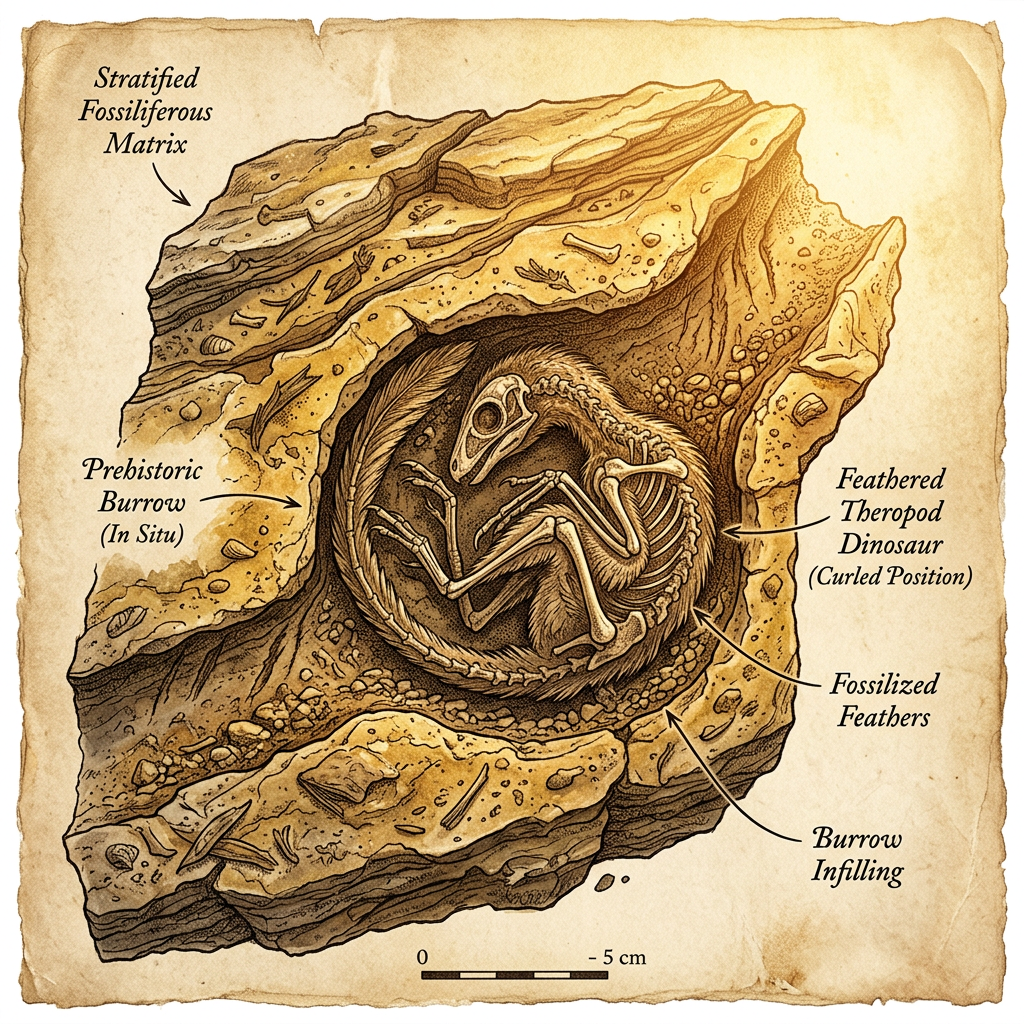
Paleontologists in the French Jura Mountains have unearthed the exceptionally well-preserved remains of a new dinosaur species, Fossoraptor jurassicus. The find is groundbreaking as it includes not only the skeletal remains of three individuals but also their intact fossilized nesting burrows. These small, feathered herbivores appear to have lived in complex subterranean systems, a behavioral trait previously unknown in this branch of the ornithopod family during the Middle Jurassic.
The preservation of the soft tissue and primitive feathers provides critical data on the thermoregulation of burrowing dinosaurs. Researchers hypothesize that these dinosaurs developed burrowing habits to survive the seasonal temperature fluctuations of the ancient European archipelago. The presence of juvenile and adult skeletons within the same burrow suggests a high degree of social cooperation and parental care among these early prehistoric species.